


















Connect with us

Hi, what are you looking for?

Politics

Trump Avoids Jail Time in Hush Money Case, But Faces Long-Term Consequences

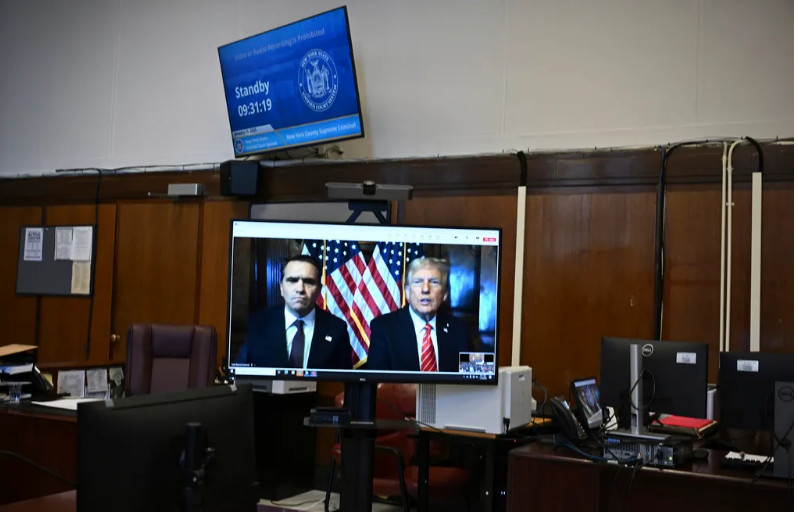
President-elect Donald Trump has avoided jail time, fines, or community service following his conviction related to the New York hush money case. On Friday, a judge issued a sentence of “unconditional discharge,” effectively closing the case with no punishment. However, unless the conviction is overturned, Trump will carry felonies on his criminal record, potentially impacting certain rights and opportunities.

Voting Rights

Despite his felony conviction, Trump will retain the ability to vote. He is registered to vote in Florida, where the law restores voting rights after the completion of a sentence, except for those convicted of murder or sex offenses. Since Trump was convicted in New York, where voting rights are restored after release, his Florida registration remains intact.

Gun Ownership

Trump, like other convicted felons, will lose the right to possess firearms under federal law. This restriction prevents anyone convicted of a felony from legally owning or purchasing a gun.

DNA Sample Requirement

As part of his felony conviction in New York, Trump will be required to provide a DNA sample for the state’s crime databank. This process involves a non-invasive cheek swab to collect genetic material, which is then analyzed and added to the state’s database. The system helps identify suspects in unsolved crimes by matching profiles with evidence collected from crime scenes.

Eligibility to Hold Office

There is no federal law that prohibits individuals with felony convictions from running for president or holding federal office. State laws may impose restrictions on candidates for state and local offices, but these do not apply to federal elections. Trump remains eligible to run for re-election in the future.

Travel Limitations

Trump will retain the ability to travel internationally. As a former president, he will have a diplomatic passport for official business and can also maintain a regular passport. While some countries may restrict entry to individuals with felony convictions, such as Canada, the United Kingdom, and Israel, there are no restrictions preventing him from traveling.

Business Opportunities

Trump’s felony conviction could impact his ability to hold certain business licenses, such as liquor or gaming licenses. In New Jersey, where he owns golf courses, individuals convicted of crimes involving moral turpitude are barred from holding liquor licenses. However, since Trump’s properties are owned by corporate entities, his personal conviction may not affect the ability to serve alcohol at his businesses. His past involvement in the casino industry could also prevent him from re-entering the business, as criminal convictions typically disqualify individuals from obtaining gaming licenses.

Pardon Possibilities

Trump’s only potential route for pardon lies with New York Governor Kathy Hochul, as the case was tried in state court. While presidential pardons only apply to federal crimes, it seems unlikely that Hochul, a Democrat, would offer a pardon. Hochul has stated that any consideration for a pardon would require remorse, a sentiment Trump has not expressed, maintaining his stance that the case against him is a political “hoax.”

As the legal proceedings surrounding Trump continue, the long-term effects of his felony conviction will unfold, potentially altering various aspects of his personal and professional life.


Business

Fraudsters are increasingly using AI-generated images and videos to trick people into handing over sensitive personal and financial information, according to FraudSMART, the financial crime awareness initiative operated by the Banking and Payments Federation Ireland (BPFI). The organisation has reported a rise in online adverts promoting fake, State-backed investment schemes. These scams often use fabricated images of well-known politicians and business figures to make the offers appear legitimate and encourage users to click on registration links. Niamh Davenport, head of financial crime at BPFI, said scammers are deliberately exploiting recent media coverage of a planned State-backed savings and investment scheme to give their frauds a sense of credibility. “They often claim the scheme is open to everyone, but that places are limited and being ‘snapped up’ fast, in order to pressure people to act quickly,” she said. “They typically promise guaranteed returns or a guaranteed monthly income.” FraudSMART said that while anyone can be targeted, people in their early 50s are particularly vulnerable to investment scams. This age group is often focused on retirement planning, making them more receptive to financial offers that appear secure or high-yield. According to the organisation, most scams follow a similar pattern. Victims are first directed to click a registration link and complete a short online form providing their contact details. They are then contacted by someone posing as a financial adviser, who urges them to make an immediate “security deposit” to secure participation in the scheme. Once a payment is made, the money is quickly moved through multiple accounts, often overseas, making recovery extremely difficult. Davenport warned that scammers are becoming more sophisticated in their use of technology, particularly AI tools that allow them to create realistic but entirely fake promotional content. These materials are designed to mimic legitimate financial advertisements and build trust with potential victims. Recent figures from An Garda Síochána show investment fraud rose by 20% last year, with losses exceeding €20 million. The scale of individual scams varies widely, ranging from smaller crypto-related frauds involving a few hundred euro to large-scale investment schemes where victims lose tens of thousands. FraudSMART is urging the public to remain cautious when encountering online investment advertisements, especially those promising guaranteed returns or requiring urgent action. It also advises consumers to avoid sharing personal information with unverified sources and to be wary of pressure tactics designed to rush financial decisions. Authorities continue to warn that fraudsters are adapting quickly, using advanced digital tools to target victims across multiple platforms.

Trending

Business

Fraudsters are increasingly using AI-generated images and videos to trick people into handing over sensitive personal and financial information, according to FraudSMART, the financial crime awareness initiative operated by the Banking and Payments Federation Ireland (BPFI). The organisation has reported a rise in online adverts promoting fake, State-backed investment schemes. These scams often use fabricated images of well-known politicians and business figures to make the offers appear legitimate and encourage users to click on registration links. Niamh Davenport, head of financial crime at BPFI, said scammers are deliberately exploiting recent media coverage of a planned State-backed savings and investment scheme to give their frauds a sense of credibility. “They often claim the scheme is open to everyone, but that places are limited and being ‘snapped up’ fast, in order to pressure people to act quickly,” she said. “They typically promise guaranteed returns or a guaranteed monthly income.” FraudSMART said that while anyone can be targeted, people in their early 50s are particularly vulnerable to investment scams. This age group is often focused on retirement planning, making them more receptive to financial offers that appear secure or high-yield. According to the organisation, most scams follow a similar pattern. Victims are first directed to click a registration link and complete a short online form providing their contact details. They are then contacted by someone posing as a financial adviser, who urges them to make an immediate “security deposit” to secure participation in the scheme. Once a payment is made, the money is quickly moved through multiple accounts, often overseas, making recovery extremely difficult. Davenport warned that scammers are becoming more sophisticated in their use of technology, particularly AI tools that allow them to create realistic but entirely fake promotional content. These materials are designed to mimic legitimate financial advertisements and build trust with potential victims. Recent figures from An Garda Síochána show investment fraud rose by 20% last year, with losses exceeding €20 million. The scale of individual scams varies widely, ranging from smaller crypto-related frauds involving a few hundred euro to large-scale investment schemes where victims lose tens of thousands. FraudSMART is urging the public to remain cautious when encountering online investment advertisements, especially those promising guaranteed returns or requiring urgent action. It also advises consumers to avoid sharing personal information with unverified sources and to be wary of pressure tactics designed to rush financial decisions. Authorities continue to warn that fraudsters are adapting quickly, using advanced digital tools to target victims across multiple platforms.

You May Also Like

Politics

WASHINGTON — The Pentagon announced on Sunday that the United States will send a Terminal High Altitude Area Defense (THAAD) battery to Israel, alongside...

Health

NEW YORK — Teen smoking in the United States has reached an all-time low in 2024, with significant declines in overall youth tobacco use,...

Politics

WASHINGTON — As the countdown to the November 5 presidential election continues, former President Donald Trump is urging his supporters to aim for a...

Politics

In September, NASA announced that summer 2024 was the hottest on record. Just days later, the U.S. faced the dual impact of Hurricanes Helene...