


















Connect with us

Hi, what are you looking for?

Health

Skin Cancer Screenings: What You Need to Know for 2025

As skin cancer rates continue to rise, dermatologists are urging individuals to take proactive steps in maintaining their skin health by scheduling routine skin cancer screenings. Dr. Susan Massick, an associate professor of dermatology at The Ohio State University Wexner Medical Center, emphasizes that skin checks are simple, quick, and painless, offering peace of mind for those concerned about their skin health.

According to Dr. Massick, “There is nothing to fear, dread, or be anxious about. There is no preparation needed beforehand, no bloodwork or imaging studies required during it, and no downtime afterward.” A skin cancer screening can detect potentially harmful changes early, which could make a life-saving difference, particularly when the condition is caught early enough.

Who Should Get a Skin Cancer Screening?

The United States Preventative Services Task Force (USPSTF) does not recommend routine annual skin exams for all individuals. In fact, they suggest that asymptomatic adults and adolescents at low risk may not need a professional checkup. However, the American Academy of Dermatology recommends self-exams for everyone and encourages those with higher risks to seek professional screenings.

Dr. Shoshana Marmon, assistant professor at New York Medical College, explains that individuals with a personal or family history of skin cancer, a high number of moles or atypical moles, or significant sun exposure should schedule annual professional screenings. This also applies to people who have had sunburns, used tanning beds, or experienced high-intensity sun exposure during their lifetime.

“People with fair skin, light eyes, or a tendency to burn easily are also at higher risk and should consider regular skin checks,” says Dr. Massick.

For those with more significant risk factors, dermatologists may recommend more frequent exams. Patients who have a history of non-melanoma skin cancer may need a check-up every six months, while those with melanoma may require screenings every three months for two years.

What Happens During a Skin Cancer Screening?

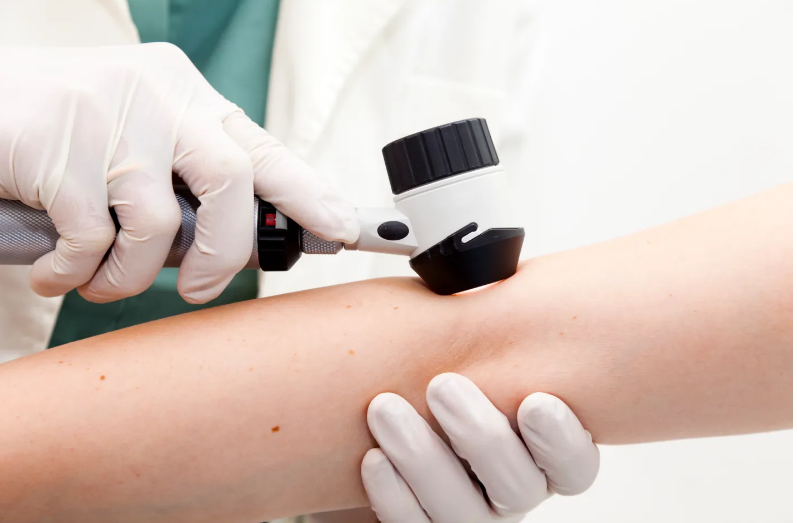
When you visit the dermatologist for a skin check, you’ll first answer questions regarding your medical history and skin health. The dermatologist will then perform a full-body examination, looking for abnormal lesions or changes in existing skin marks. Areas like your scalp, behind your ears, and between your fingers and toes will be carefully examined.

The examination is non-invasive and painless, though dermatologists may use a magnifying tool for a closer look. If they identify any concerning lesions, a skin biopsy may be performed to rule out cancer. This procedure typically uses a local anesthetic and is also pain-free.

After the Screening

After the screening, your dermatologist will provide feedback on whether any concerning lesions need further attention. If a biopsy is required, results are typically available within one to two weeks. In the event of a cancer diagnosis, early-stage skin cancers, including melanoma, can be treated effectively with in-office excisions.

If no issues are found, dermatologists will encourage continued self-monitoring of your skin and schedule follow-up appointments as needed.

The Importance of Early Detection

Early detection of skin cancer can significantly improve treatment outcomes. Dr. Marmon encourages individuals to prioritize skin health and not delay getting checked, even if they believe they are “too young” to develop skin cancer. Regular screenings, combined with at-home self-exams, can help identify changes before they become more serious.

As skin cancer remains a common concern, taking the time for a skin check is an easy and proactive way to safeguard your health in 2025.


Business

Fraudsters are increasingly using AI-generated images and videos to trick people into handing over sensitive personal and financial information, according to FraudSMART, the financial crime awareness initiative operated by the Banking and Payments Federation Ireland (BPFI). The organisation has reported a rise in online adverts promoting fake, State-backed investment schemes. These scams often use fabricated images of well-known politicians and business figures to make the offers appear legitimate and encourage users to click on registration links. Niamh Davenport, head of financial crime at BPFI, said scammers are deliberately exploiting recent media coverage of a planned State-backed savings and investment scheme to give their frauds a sense of credibility. “They often claim the scheme is open to everyone, but that places are limited and being ‘snapped up’ fast, in order to pressure people to act quickly,” she said. “They typically promise guaranteed returns or a guaranteed monthly income.” FraudSMART said that while anyone can be targeted, people in their early 50s are particularly vulnerable to investment scams. This age group is often focused on retirement planning, making them more receptive to financial offers that appear secure or high-yield. According to the organisation, most scams follow a similar pattern. Victims are first directed to click a registration link and complete a short online form providing their contact details. They are then contacted by someone posing as a financial adviser, who urges them to make an immediate “security deposit” to secure participation in the scheme. Once a payment is made, the money is quickly moved through multiple accounts, often overseas, making recovery extremely difficult. Davenport warned that scammers are becoming more sophisticated in their use of technology, particularly AI tools that allow them to create realistic but entirely fake promotional content. These materials are designed to mimic legitimate financial advertisements and build trust with potential victims. Recent figures from An Garda Síochána show investment fraud rose by 20% last year, with losses exceeding €20 million. The scale of individual scams varies widely, ranging from smaller crypto-related frauds involving a few hundred euro to large-scale investment schemes where victims lose tens of thousands. FraudSMART is urging the public to remain cautious when encountering online investment advertisements, especially those promising guaranteed returns or requiring urgent action. It also advises consumers to avoid sharing personal information with unverified sources and to be wary of pressure tactics designed to rush financial decisions. Authorities continue to warn that fraudsters are adapting quickly, using advanced digital tools to target victims across multiple platforms.

Trending

Business

Fraudsters are increasingly using AI-generated images and videos to trick people into handing over sensitive personal and financial information, according to FraudSMART, the financial crime awareness initiative operated by the Banking and Payments Federation Ireland (BPFI). The organisation has reported a rise in online adverts promoting fake, State-backed investment schemes. These scams often use fabricated images of well-known politicians and business figures to make the offers appear legitimate and encourage users to click on registration links. Niamh Davenport, head of financial crime at BPFI, said scammers are deliberately exploiting recent media coverage of a planned State-backed savings and investment scheme to give their frauds a sense of credibility. “They often claim the scheme is open to everyone, but that places are limited and being ‘snapped up’ fast, in order to pressure people to act quickly,” she said. “They typically promise guaranteed returns or a guaranteed monthly income.” FraudSMART said that while anyone can be targeted, people in their early 50s are particularly vulnerable to investment scams. This age group is often focused on retirement planning, making them more receptive to financial offers that appear secure or high-yield. According to the organisation, most scams follow a similar pattern. Victims are first directed to click a registration link and complete a short online form providing their contact details. They are then contacted by someone posing as a financial adviser, who urges them to make an immediate “security deposit” to secure participation in the scheme. Once a payment is made, the money is quickly moved through multiple accounts, often overseas, making recovery extremely difficult. Davenport warned that scammers are becoming more sophisticated in their use of technology, particularly AI tools that allow them to create realistic but entirely fake promotional content. These materials are designed to mimic legitimate financial advertisements and build trust with potential victims. Recent figures from An Garda Síochána show investment fraud rose by 20% last year, with losses exceeding €20 million. The scale of individual scams varies widely, ranging from smaller crypto-related frauds involving a few hundred euro to large-scale investment schemes where victims lose tens of thousands. FraudSMART is urging the public to remain cautious when encountering online investment advertisements, especially those promising guaranteed returns or requiring urgent action. It also advises consumers to avoid sharing personal information with unverified sources and to be wary of pressure tactics designed to rush financial decisions. Authorities continue to warn that fraudsters are adapting quickly, using advanced digital tools to target victims across multiple platforms.

You May Also Like

Politics

WASHINGTON — The Pentagon announced on Sunday that the United States will send a Terminal High Altitude Area Defense (THAAD) battery to Israel, alongside...

Health

NEW YORK — Teen smoking in the United States has reached an all-time low in 2024, with significant declines in overall youth tobacco use,...

Politics

WASHINGTON — As the countdown to the November 5 presidential election continues, former President Donald Trump is urging his supporters to aim for a...

Politics

In September, NASA announced that summer 2024 was the hottest on record. Just days later, the U.S. faced the dual impact of Hurricanes Helene...