


















Connect with us

Hi, what are you looking for?

Politics

Vice President Kamala Harris Faces Critics as She Swears in New Senators

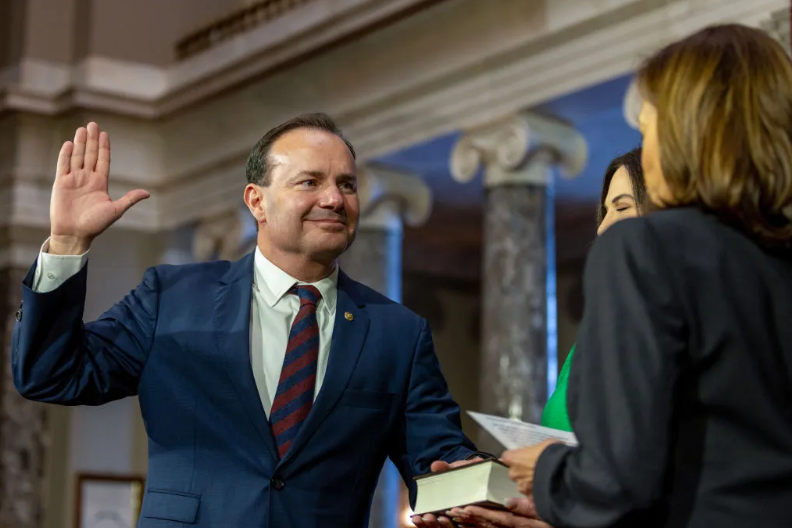
Vice President Kamala Harris will swear in a new class of Senators on Friday, but many of the lawmakers receiving the oath of office have been among her most vocal and creative critics in recent months. At campaign rallies, on social media, and in interviews, several of these politicians have spread false claims about Harris, accusing her of plotting to ban Christmas, bring dog meat to immigrant kitchens, and manipulate elections through illegal voting by undocumented immigrants.

Three of the four Senators-elect who spoke at the Republican National Convention in Milwaukee last year have also ridiculed Harris, often mispronouncing her name in the process. For Harris, this moment of political ritual is part of the tough reality faced by any Vice President, particularly those like herself, Al Gore, and Richard Nixon, who have lost their presidential bids but still return to the Capitol to fulfill their constitutional duties. The bruising experience of standing alongside political adversaries, who have often attacked them, is a harsh reality of their office.

Harris’s position has been further complicated by the arrival of some of her fiercest critics in Washington, where they now hold more power. Among them is Sen.-elect Bernie Moreno of Ohio, who has accused Harris of prioritizing the welfare of undocumented immigrants over that of U.S. citizens. Moreno, who won his seat by focusing on voters’ concerns about immigration, even fueled false rumors about people in Ohio eating dog meat as a result of Harris’s policies. Another critic, Sen.-elect Jim Banks of Indiana, used culture war rhetoric, claiming Harris sought to wage a “war on Christmas.”

Sen. Ted Cruz of Texas has also been vocal in his criticism, accusing Harris of orchestrating a flood of asylum seekers into the U.S. for political purposes, despite the fact that non-citizens cannot vote. Cruz’s rhetoric included claims that Ukrainian President Zelenskyy was using his visit to the U.S. as a campaign opportunity to back Harris’s political agenda.

Sen. Rick Scott of Florida, who aspired to lead the Senate but lost out, also joined in the attacks, accusing Harris of ignoring Florida’s post-hurricane recovery efforts and accusing her of promoting policies based on “racism.”

Despite the harsh criticisms and personal attacks, Harris is no stranger to the political game. A career prosecutor and former Senator, she understands the nature of her role as a political lightning rod. She is well aware that her opponents will use every opportunity to create division, often exaggerating differences between the two parties.

As she swears in the new class of Senators, Harris is also preparing for the upcoming transition. With the Senate shifting to Republican control, and the likely ascension of figures like Donald Trump and Vice President-elect J.D. Vance, Harris faces a new political landscape. But as always, she will navigate it with resilience, embracing the performative role of her office, while keeping a steady eye on her next political moves.


Business

Fraudsters are increasingly using AI-generated images and videos to trick people into handing over sensitive personal and financial information, according to FraudSMART, the financial crime awareness initiative operated by the Banking and Payments Federation Ireland (BPFI). The organisation has reported a rise in online adverts promoting fake, State-backed investment schemes. These scams often use fabricated images of well-known politicians and business figures to make the offers appear legitimate and encourage users to click on registration links. Niamh Davenport, head of financial crime at BPFI, said scammers are deliberately exploiting recent media coverage of a planned State-backed savings and investment scheme to give their frauds a sense of credibility. “They often claim the scheme is open to everyone, but that places are limited and being ‘snapped up’ fast, in order to pressure people to act quickly,” she said. “They typically promise guaranteed returns or a guaranteed monthly income.” FraudSMART said that while anyone can be targeted, people in their early 50s are particularly vulnerable to investment scams. This age group is often focused on retirement planning, making them more receptive to financial offers that appear secure or high-yield. According to the organisation, most scams follow a similar pattern. Victims are first directed to click a registration link and complete a short online form providing their contact details. They are then contacted by someone posing as a financial adviser, who urges them to make an immediate “security deposit” to secure participation in the scheme. Once a payment is made, the money is quickly moved through multiple accounts, often overseas, making recovery extremely difficult. Davenport warned that scammers are becoming more sophisticated in their use of technology, particularly AI tools that allow them to create realistic but entirely fake promotional content. These materials are designed to mimic legitimate financial advertisements and build trust with potential victims. Recent figures from An Garda Síochána show investment fraud rose by 20% last year, with losses exceeding €20 million. The scale of individual scams varies widely, ranging from smaller crypto-related frauds involving a few hundred euro to large-scale investment schemes where victims lose tens of thousands. FraudSMART is urging the public to remain cautious when encountering online investment advertisements, especially those promising guaranteed returns or requiring urgent action. It also advises consumers to avoid sharing personal information with unverified sources and to be wary of pressure tactics designed to rush financial decisions. Authorities continue to warn that fraudsters are adapting quickly, using advanced digital tools to target victims across multiple platforms.

Trending

Business

Fraudsters are increasingly using AI-generated images and videos to trick people into handing over sensitive personal and financial information, according to FraudSMART, the financial crime awareness initiative operated by the Banking and Payments Federation Ireland (BPFI). The organisation has reported a rise in online adverts promoting fake, State-backed investment schemes. These scams often use fabricated images of well-known politicians and business figures to make the offers appear legitimate and encourage users to click on registration links. Niamh Davenport, head of financial crime at BPFI, said scammers are deliberately exploiting recent media coverage of a planned State-backed savings and investment scheme to give their frauds a sense of credibility. “They often claim the scheme is open to everyone, but that places are limited and being ‘snapped up’ fast, in order to pressure people to act quickly,” she said. “They typically promise guaranteed returns or a guaranteed monthly income.” FraudSMART said that while anyone can be targeted, people in their early 50s are particularly vulnerable to investment scams. This age group is often focused on retirement planning, making them more receptive to financial offers that appear secure or high-yield. According to the organisation, most scams follow a similar pattern. Victims are first directed to click a registration link and complete a short online form providing their contact details. They are then contacted by someone posing as a financial adviser, who urges them to make an immediate “security deposit” to secure participation in the scheme. Once a payment is made, the money is quickly moved through multiple accounts, often overseas, making recovery extremely difficult. Davenport warned that scammers are becoming more sophisticated in their use of technology, particularly AI tools that allow them to create realistic but entirely fake promotional content. These materials are designed to mimic legitimate financial advertisements and build trust with potential victims. Recent figures from An Garda Síochána show investment fraud rose by 20% last year, with losses exceeding €20 million. The scale of individual scams varies widely, ranging from smaller crypto-related frauds involving a few hundred euro to large-scale investment schemes where victims lose tens of thousands. FraudSMART is urging the public to remain cautious when encountering online investment advertisements, especially those promising guaranteed returns or requiring urgent action. It also advises consumers to avoid sharing personal information with unverified sources and to be wary of pressure tactics designed to rush financial decisions. Authorities continue to warn that fraudsters are adapting quickly, using advanced digital tools to target victims across multiple platforms.

You May Also Like

Politics

WASHINGTON — The Pentagon announced on Sunday that the United States will send a Terminal High Altitude Area Defense (THAAD) battery to Israel, alongside...

Health

NEW YORK — Teen smoking in the United States has reached an all-time low in 2024, with significant declines in overall youth tobacco use,...

Politics

WASHINGTON — As the countdown to the November 5 presidential election continues, former President Donald Trump is urging his supporters to aim for a...

Politics

In September, NASA announced that summer 2024 was the hottest on record. Just days later, the U.S. faced the dual impact of Hurricanes Helene...