



















Connect with us

Hi, what are you looking for?

Politics

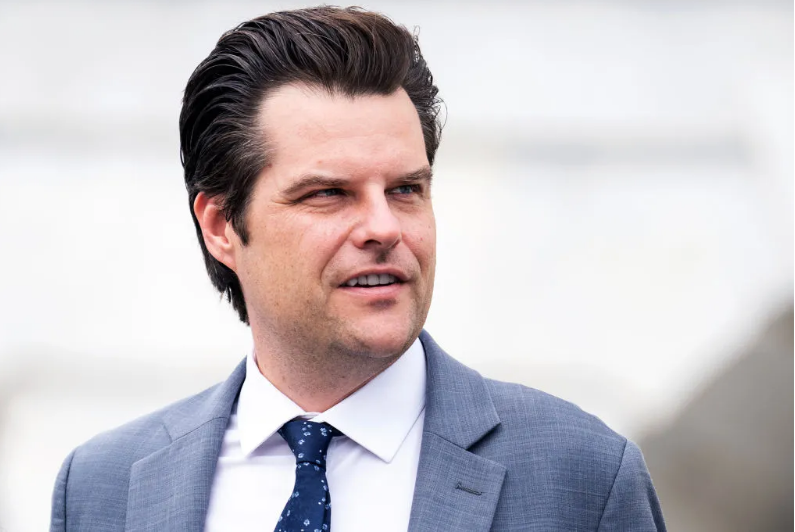
House Ethics Committee Accuses Matt Gaetz of Paying for Sex, Illicit Drug Use

The House Ethics Committee released a scathing 37-page report on Monday, accusing Rep. Matt Gaetz (R-Fla.) of repeatedly paying for sex, including with a 17-year-old girl, and using illicit drugs during his time in office. The investigation, which spanned nearly four years, culminated in a conclusion that Gaetz violated multiple state laws related to sexual misconduct and obstructed the committee’s work.

The report, which includes explicit details of Gaetz’s involvement in sex-fueled parties and vacations between 2017 and 2020, revealed that Gaetz used his position as a U.S. Congressman to engage in a lifestyle of prostitution, drug use, and misconduct. While the committee found no evidence of Gaetz violating federal sex trafficking laws, it did state that Gaetz violated House rules and other ethical standards, including prohibitions against prostitution, statutory rape, and improper gifts.

Gaetz, who was first elected in 2017, strongly denied the allegations ahead of the report’s release. On social media, he criticized the process and rejected the committee’s findings, claiming they were based on misleading information. “Giving funds to someone you are dating—without them asking for it—is now prostitution?” Gaetz posted on X, formerly Twitter.

The committee’s investigation relied on extensive evidence, including text messages, financial records, travel receipts, and witness testimony. The report documents several instances where Gaetz arranged for women to attend parties and trips, including a 2018 trip to the Bahamas where he accepted excessive gifts. Investigators also found that Gaetz made false claims to the State Department, arranging for his chief of staff to obtain a passport for a woman he was sexually involved with by falsely claiming she was his constituent.

In the case of the 17-year-old, the report acknowledged that there was no direct evidence Gaetz knew she was a minor when they had sex. However, the committee noted that Gaetz continued to communicate with her and met up with her again after she turned 18, engaging in “commercial sex.” Florida law criminalizes sex with minors aged 16 or 17 by anyone over the age of 24, regardless of whether the individual knew the minor’s age.

Joel Leppard, an attorney for two women who testified against Gaetz, called the report “vindication” for his clients and praised the committee for its transparency.

While the report’s release was met with backlash from some Republican members, including House Speaker Mike Johnson, the bipartisan committee voted to publish the findings. Gaetz, who was considered a contender for attorney general under former President Donald Trump, filed a lawsuit in a last-ditch effort to prevent the report from being made public, claiming it was defamatory.

The Ethics Committee’s investigation had been delayed while the Justice Department conducted its own probe, but no charges were brought against Gaetz. The committee described him as uncooperative throughout its investigation, providing minimal documentation and refusing to participate in an interview.

This report adds to the growing controversy surrounding Gaetz, who has faced multiple scandals during his political career. With his future in politics uncertain, Gaetz’s actions have sparked widespread scrutiny, and his resignation from Congress earlier this year removed him from the committee’s jurisdiction.


Business

Fraudsters are increasingly using AI-generated images and videos to trick people into handing over sensitive personal and financial information, according to FraudSMART, the financial crime awareness initiative operated by the Banking and Payments Federation Ireland (BPFI). The organisation has reported a rise in online adverts promoting fake, State-backed investment schemes. These scams often use fabricated images of well-known politicians and business figures to make the offers appear legitimate and encourage users to click on registration links. Niamh Davenport, head of financial crime at BPFI, said scammers are deliberately exploiting recent media coverage of a planned State-backed savings and investment scheme to give their frauds a sense of credibility. “They often claim the scheme is open to everyone, but that places are limited and being ‘snapped up’ fast, in order to pressure people to act quickly,” she said. “They typically promise guaranteed returns or a guaranteed monthly income.” FraudSMART said that while anyone can be targeted, people in their early 50s are particularly vulnerable to investment scams. This age group is often focused on retirement planning, making them more receptive to financial offers that appear secure or high-yield. According to the organisation, most scams follow a similar pattern. Victims are first directed to click a registration link and complete a short online form providing their contact details. They are then contacted by someone posing as a financial adviser, who urges them to make an immediate “security deposit” to secure participation in the scheme. Once a payment is made, the money is quickly moved through multiple accounts, often overseas, making recovery extremely difficult. Davenport warned that scammers are becoming more sophisticated in their use of technology, particularly AI tools that allow them to create realistic but entirely fake promotional content. These materials are designed to mimic legitimate financial advertisements and build trust with potential victims. Recent figures from An Garda Síochána show investment fraud rose by 20% last year, with losses exceeding €20 million. The scale of individual scams varies widely, ranging from smaller crypto-related frauds involving a few hundred euro to large-scale investment schemes where victims lose tens of thousands. FraudSMART is urging the public to remain cautious when encountering online investment advertisements, especially those promising guaranteed returns or requiring urgent action. It also advises consumers to avoid sharing personal information with unverified sources and to be wary of pressure tactics designed to rush financial decisions. Authorities continue to warn that fraudsters are adapting quickly, using advanced digital tools to target victims across multiple platforms.

Trending

Business

Fraudsters are increasingly using AI-generated images and videos to trick people into handing over sensitive personal and financial information, according to FraudSMART, the financial crime awareness initiative operated by the Banking and Payments Federation Ireland (BPFI). The organisation has reported a rise in online adverts promoting fake, State-backed investment schemes. These scams often use fabricated images of well-known politicians and business figures to make the offers appear legitimate and encourage users to click on registration links. Niamh Davenport, head of financial crime at BPFI, said scammers are deliberately exploiting recent media coverage of a planned State-backed savings and investment scheme to give their frauds a sense of credibility. “They often claim the scheme is open to everyone, but that places are limited and being ‘snapped up’ fast, in order to pressure people to act quickly,” she said. “They typically promise guaranteed returns or a guaranteed monthly income.” FraudSMART said that while anyone can be targeted, people in their early 50s are particularly vulnerable to investment scams. This age group is often focused on retirement planning, making them more receptive to financial offers that appear secure or high-yield. According to the organisation, most scams follow a similar pattern. Victims are first directed to click a registration link and complete a short online form providing their contact details. They are then contacted by someone posing as a financial adviser, who urges them to make an immediate “security deposit” to secure participation in the scheme. Once a payment is made, the money is quickly moved through multiple accounts, often overseas, making recovery extremely difficult. Davenport warned that scammers are becoming more sophisticated in their use of technology, particularly AI tools that allow them to create realistic but entirely fake promotional content. These materials are designed to mimic legitimate financial advertisements and build trust with potential victims. Recent figures from An Garda Síochána show investment fraud rose by 20% last year, with losses exceeding €20 million. The scale of individual scams varies widely, ranging from smaller crypto-related frauds involving a few hundred euro to large-scale investment schemes where victims lose tens of thousands. FraudSMART is urging the public to remain cautious when encountering online investment advertisements, especially those promising guaranteed returns or requiring urgent action. It also advises consumers to avoid sharing personal information with unverified sources and to be wary of pressure tactics designed to rush financial decisions. Authorities continue to warn that fraudsters are adapting quickly, using advanced digital tools to target victims across multiple platforms.

You May Also Like

Politics

WASHINGTON — The Pentagon announced on Sunday that the United States will send a Terminal High Altitude Area Defense (THAAD) battery to Israel, alongside...

Health

NEW YORK — Teen smoking in the United States has reached an all-time low in 2024, with significant declines in overall youth tobacco use,...

Politics

WASHINGTON — As the countdown to the November 5 presidential election continues, former President Donald Trump is urging his supporters to aim for a...

Politics

In September, NASA announced that summer 2024 was the hottest on record. Just days later, the U.S. faced the dual impact of Hurricanes Helene...