

















In September, NASA announced that summer 2024 was the hottest on record. Just days later, the U.S. faced the dual impact of Hurricanes Helene and Milton, both notable for their intensity and destruction. These events, alongside a series of alarming climate statistics, have raised concerns among many. Yet, the Republican Party continues to oppose significant climate change mitigation efforts.
Florida Governor Ron DeSantis, whose state was significantly impacted by both hurricanes, signed legislation in May to remove most references to climate change from state law. During a press conference on October 10, he dismissed claims linking the hurricanes to climate change, stating, “They try to take different things that happen with tropical weather and act like it’s something—there’s nothing new under the sun.”
A recent Pew poll revealed a stark contrast in perspectives: only 12% of Republicans believe addressing climate change should be a priority for the president and Congress, compared to 59% of Democrats. This reluctance extends beyond promoting fossil fuel production and eliminating environmental regulations; Republicans are now employing strategies to dismantle climate education and advocacy programs while promoting misinformation. Notably, Republican Congresswoman Marjorie Taylor Greene recently claimed that individuals can “control” the weather.
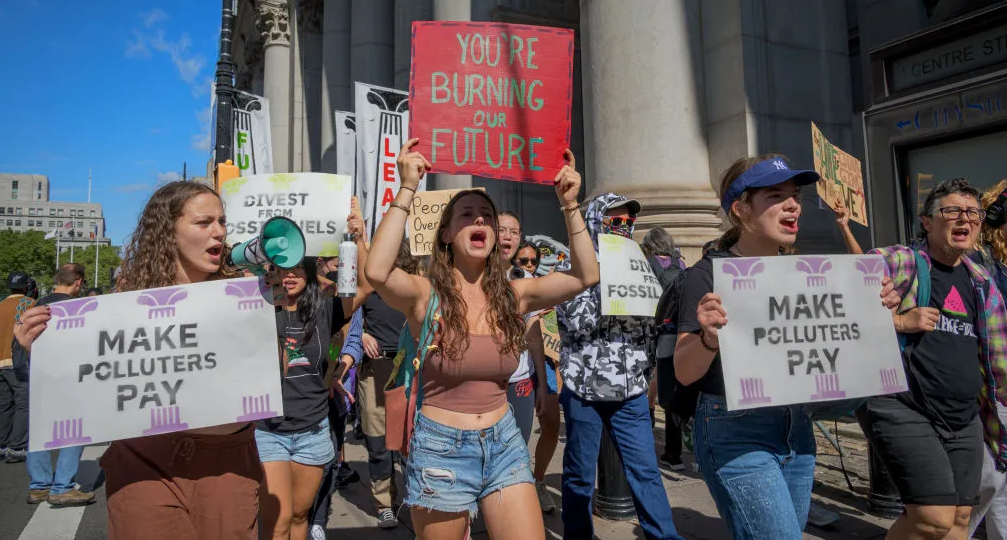
The GOP’s latest initiative aims to exploit the rising phenomenon of “climate anxiety” among American youth. This term describes the dread young people feel regarding the implications of climate change. A study conducted by MassINC Polling Group found that 53% of middle and high school students believe climate change will significantly impact their lives, resulting in feelings of sadness and helplessness. Democratic presidential nominee Kamala Harris addressed these concerns in a 2023 event, highlighting the fears young people face regarding their futures and family planning. The Right quickly misinterpreted her comments, suggesting she was advocating for young people to avoid having children or buying homes.
Research shows that individuals impacted by climate-related disasters often experience increased anxiety and depression as they grapple with recovery. As the frequency and severity of these disasters rise, youth are understandably questioning their future and that of their families. This is not an irrational response but a legitimate concern.
During his presidency, Donald Trump frequently mocked environmentalists and young activists, often trivializing their concerns. He dismissed Greta Thunberg’s impassioned speech at the United Nations in 2019, suggesting she was simply a “happy young girl.” If re-elected, Trump has pledged to withdraw from the Paris Climate Accords once again and remove obstacles to oil and gas projects, further complicating the situation.
Republican efforts to undermine climate education have escalated, exemplified by U.S. Senator Ted Cruz’s August 2024 letter calling for an investigation into the National Oceanic and Atmospheric Administration (NOAA) for producing materials he claimed fostered “climate alarmism.” This attack on educational content aims to silence discussions on climate change, framing them as harmful to youth.
To combat this weaponization of climate anxiety, activists must refine their messaging. A 2022 poll found that 75% of youth aged 14 to 24 experienced mental health issues due to climate-related news. While the urgency of climate reports must remain, research suggests that optimistic messaging can galvanize action, while overly pessimistic narratives may detract from the urgent realities.
Additionally, the government must distance itself from the financial interests of the fossil fuel industry. A 2024 analysis revealed that over $133 million was spent on oil and gas lobbying efforts last year, with a significant portion directed to Republican candidates. Transparency in political donations is essential to ensure accountability.
Finally, there should be a clear separation between government influence and educational content, allowing educators and nonpartisan boards to guide climate discussions. The recently passed Kids Online Safety Act (KOSA) highlights the risks of restricting access to climate-related content, potentially stifling young activists’ voices.
Ultimately, silencing discussions about climate change will not alleviate youth fears; instead, it may exacerbate them. Open dialogue and effective education are vital in addressing the pressing realities of climate change and its impacts on future generations.