

















Connect with us

Hi, what are you looking for?

Politics

U.S. and Ukraine Sign Landmark Mineral Investment Deal Amid Geopolitical Tensions

The United States and Ukraine signed a long-awaited economic agreement on Wednesday, April 30, granting the U.S. preferential access to Ukrainian mineral projects in exchange for creating a new investment fund aimed at supporting Ukraine’s reconstruction and economic recovery.

The agreement, titled the United States-Ukraine Reconstruction Investment Fund, was signed by U.S. Treasury Secretary Scott Bessent and Ukrainian First Deputy Prime Minister Yulia Svyrydenko. According to a fact sheet released by the White House, the deal establishes a fund that will collect 50% of royalties and license fees from Ukrainian natural resource projects and reinvest those funds into future development initiatives in the country.

“This partnership represents the United States taking an economic stake in securing a free, peaceful, and sovereign future for Ukraine,” White House Press Secretary Karoline Leavitt said at a briefing on Thursday, describing the deal as historic.

Ukraine has since published the full agreement, describing it as a tool to encourage transparent and accountable investment into key sectors of the economy. The document also references “Russia’s full-scale invasion of Ukraine,” underlining the broader geopolitical backdrop of the partnership.

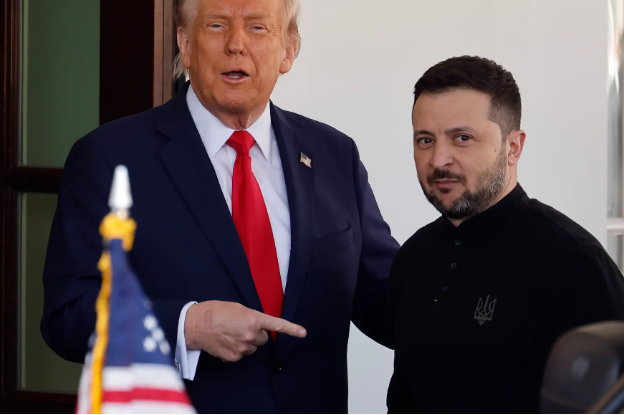
The agreement, originally proposed months ago, had stalled following a contentious Oval Office exchange between U.S. President Donald Trump and Ukrainian President Volodymyr Zelensky in late February. Relations appeared to cool, and Zelensky’s visit to Washington was cut short. However, momentum resumed following an encounter between the two leaders at Pope Francis’ funeral in April, where Trump later said he urged Zelensky to finalize the deal.

“This is about helping Ukraine build back stronger,” Bessent wrote on social media after the signing. “Economic security is national security.”

Svyrydenko emphasized that the agreement does not compromise Ukraine’s sovereignty over its natural resources. “Full ownership and control remain with Ukraine. All resources on our territory and in territorial waters belong to Ukraine,” she posted on X (formerly Twitter).

Political reactions have been mixed. Republican U.S. Secretary of State Marco Rubio praised the deal as a “milestone in shared prosperity,” while Democratic Congressman Gregory Meeks criticized it as “Donald Trump’s extortion of Ukraine,” suggesting it could distract from diplomatic efforts to end the war.

Ukrainian President Zelensky called the agreement a breakthrough for investment and legal modernization. In a separate statement, he urged continued international pressure on Russia, following overnight drone attacks in Odesa.

Russian officials dismissed the agreement as exploitation. Dmitry Medvedev, Russia’s former president, accused the U.S. of “forcing Ukraine to pay for weapons with its national wealth.”

Despite geopolitical tensions, the deal signals deepening economic ties between Washington and Kyiv, with both sides hoping the partnership can support Ukraine’s long-term recovery and stability.


Business

Fraudsters are increasingly using AI-generated images and videos to trick people into handing over sensitive personal and financial information, according to FraudSMART, the financial crime awareness initiative operated by the Banking and Payments Federation Ireland (BPFI). The organisation has reported a rise in online adverts promoting fake, State-backed investment schemes. These scams often use fabricated images of well-known politicians and business figures to make the offers appear legitimate and encourage users to click on registration links. Niamh Davenport, head of financial crime at BPFI, said scammers are deliberately exploiting recent media coverage of a planned State-backed savings and investment scheme to give their frauds a sense of credibility. “They often claim the scheme is open to everyone, but that places are limited and being ‘snapped up’ fast, in order to pressure people to act quickly,” she said. “They typically promise guaranteed returns or a guaranteed monthly income.” FraudSMART said that while anyone can be targeted, people in their early 50s are particularly vulnerable to investment scams. This age group is often focused on retirement planning, making them more receptive to financial offers that appear secure or high-yield. According to the organisation, most scams follow a similar pattern. Victims are first directed to click a registration link and complete a short online form providing their contact details. They are then contacted by someone posing as a financial adviser, who urges them to make an immediate “security deposit” to secure participation in the scheme. Once a payment is made, the money is quickly moved through multiple accounts, often overseas, making recovery extremely difficult. Davenport warned that scammers are becoming more sophisticated in their use of technology, particularly AI tools that allow them to create realistic but entirely fake promotional content. These materials are designed to mimic legitimate financial advertisements and build trust with potential victims. Recent figures from An Garda Síochána show investment fraud rose by 20% last year, with losses exceeding €20 million. The scale of individual scams varies widely, ranging from smaller crypto-related frauds involving a few hundred euro to large-scale investment schemes where victims lose tens of thousands. FraudSMART is urging the public to remain cautious when encountering online investment advertisements, especially those promising guaranteed returns or requiring urgent action. It also advises consumers to avoid sharing personal information with unverified sources and to be wary of pressure tactics designed to rush financial decisions. Authorities continue to warn that fraudsters are adapting quickly, using advanced digital tools to target victims across multiple platforms.

Trending

Business

Fraudsters are increasingly using AI-generated images and videos to trick people into handing over sensitive personal and financial information, according to FraudSMART, the financial crime awareness initiative operated by the Banking and Payments Federation Ireland (BPFI). The organisation has reported a rise in online adverts promoting fake, State-backed investment schemes. These scams often use fabricated images of well-known politicians and business figures to make the offers appear legitimate and encourage users to click on registration links. Niamh Davenport, head of financial crime at BPFI, said scammers are deliberately exploiting recent media coverage of a planned State-backed savings and investment scheme to give their frauds a sense of credibility. “They often claim the scheme is open to everyone, but that places are limited and being ‘snapped up’ fast, in order to pressure people to act quickly,” she said. “They typically promise guaranteed returns or a guaranteed monthly income.” FraudSMART said that while anyone can be targeted, people in their early 50s are particularly vulnerable to investment scams. This age group is often focused on retirement planning, making them more receptive to financial offers that appear secure or high-yield. According to the organisation, most scams follow a similar pattern. Victims are first directed to click a registration link and complete a short online form providing their contact details. They are then contacted by someone posing as a financial adviser, who urges them to make an immediate “security deposit” to secure participation in the scheme. Once a payment is made, the money is quickly moved through multiple accounts, often overseas, making recovery extremely difficult. Davenport warned that scammers are becoming more sophisticated in their use of technology, particularly AI tools that allow them to create realistic but entirely fake promotional content. These materials are designed to mimic legitimate financial advertisements and build trust with potential victims. Recent figures from An Garda Síochána show investment fraud rose by 20% last year, with losses exceeding €20 million. The scale of individual scams varies widely, ranging from smaller crypto-related frauds involving a few hundred euro to large-scale investment schemes where victims lose tens of thousands. FraudSMART is urging the public to remain cautious when encountering online investment advertisements, especially those promising guaranteed returns or requiring urgent action. It also advises consumers to avoid sharing personal information with unverified sources and to be wary of pressure tactics designed to rush financial decisions. Authorities continue to warn that fraudsters are adapting quickly, using advanced digital tools to target victims across multiple platforms.

You May Also Like

Politics

WASHINGTON — The Pentagon announced on Sunday that the United States will send a Terminal High Altitude Area Defense (THAAD) battery to Israel, alongside...

Health

NEW YORK — Teen smoking in the United States has reached an all-time low in 2024, with significant declines in overall youth tobacco use,...

Politics

WASHINGTON — As the countdown to the November 5 presidential election continues, former President Donald Trump is urging his supporters to aim for a...

Politics

In September, NASA announced that summer 2024 was the hottest on record. Just days later, the U.S. faced the dual impact of Hurricanes Helene...