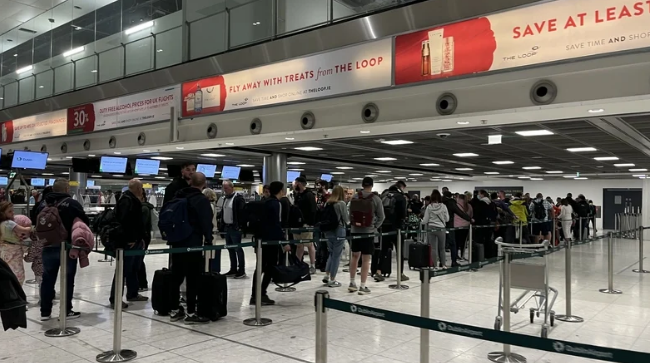
Dublin Airport’s long-running passenger cap dispute may have moved into a new phase, but the legal and planning process needed to raise the limit means the issue is unlikely to disappear soon.
The Dublin Airport (Passenger Capacity) Act 2026 has passed through the Oireachtas and been signed into law by President Catherine Connolly. The legislation gives the transport minister the authority to remove the airport’s long-standing 32 million passenger limit, which has been in place since 2007.
The DAA formally asked the minister in August to increase the limit to 40 million passengers. However, the request does not immediately change the airport’s legal position.
Before the minister can approve a new limit, An Coimisiún Pleanála must complete environmental and appropriate assessments. A public consultation will also be required and could last up to 28 weeks.
That means the 32 million limit could remain the formal planning position well into next year, despite the new legislation and the DAA’s request.
The legal uncertainty is also linked to a case before the Court of Justice of the European Union. In February, an adviser to the court issued an opinion supporting the view that the 32 million passenger limit was legally valid and could be considered when allocating landing and take-off slots at Dublin Airport.
The opinion was unwelcome news for airlines including Ryanair, Aer Lingus and several US carriers involved in the original dispute. The final CJEU ruling is expected within months and will not necessarily follow the adviser’s opinion, but it could still affect how Ireland proceeds.
In the meantime, passenger numbers at Dublin Airport have continued to rise. The airport exceeded the old annual limit by about four million passengers last year, while enforcement of the restriction has effectively been suspended during the legal proceedings.
The situation has led to the cap being described as a “zombie cap”, remaining legally in place while having little practical effect on airport traffic.
The DAA’s decision to seek a 40 million limit rather than the complete removal of the restriction gives the government a specific figure to consider as it works through the planning process.
There is also an international dimension. US airlines, through Airlines for America, have argued that the Dublin restriction conflicts with the EU-US Open Skies Agreement. They have raised concerns with the US Department of Transportation, creating the possibility of wider consequences for Irish and American airlines if the European court ultimately supports the cap.
For passengers, there is little immediate impact. Flights continue to operate and traffic remains strong. The bigger risks could emerge later if the legal dispute affects airline access, capacity or transatlantic routes.
For now, Ireland has passed legislation aimed at removing the cap, the DAA has requested a 40 million limit, and the airport continues operating beyond the old threshold. The final legal position, however, remains unresolved.
You must be logged in to post a comment Login