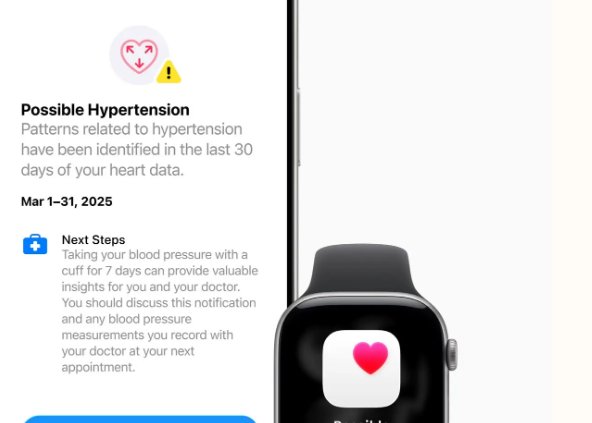
Apple Watch users will soon be able to receive alerts if they are showing signs of hypertension, following clearance of a new feature by the U.S. Food and Drug Administration (FDA) on September 11.
The tool, which will be available on Apple Watch Series 9, Apple Watch Ultra 2, and newer models in over 150 countries, does not directly diagnose high blood pressure or provide blood pressure readings. Instead, it uses the watch’s optical heart sensor to track how blood vessels contract and expand as the heart pumps. Over time, this data can reveal patterns that may indicate hypertension, prompting the device to notify the wearer and recommend consulting a doctor.
Hypertension—commonly known as high blood pressure—is one of the most widespread health issues in the U.S. According to the American Heart Association (AHA), about half of American adults are affected, but only a quarter have the condition under control. Left untreated, high blood pressure can lead to heart attacks, strokes, kidney disease, and other serious complications, with estimated costs of $131 billion annually in the U.S. alone.
The FDA’s approval follows clinical studies involving thousands of adults. In one trial, more than 2,000 participants without hypertension wore the Apple Watch for up to 12 hours a day over nearly a month. They also took daily blood pressure measurements using traditional cuffs. Results showed the Apple Watch feature was as effective as the cuff in detecting early signs of elevated blood pressure.
Medical experts have welcomed the development as a potential tool to improve awareness and early intervention. “We’ve known for a long time that high blood pressure is the major cause of heart disease, stroke, and major chronic kidney disease,” said Dr. Daniel Jones, chair of the writing committee for the upcoming 2025 AHA and American College of Cardiology (ACC) High Blood Pressure Guidelines. “Lowering blood pressure has also been shown to reduce the risk of dementia, which underscores the importance of regular monitoring—even for young adults.”
However, Jones cautioned that while wearable technology may be helpful, it is not yet considered a validated method for diagnosing or managing hypertension. The AHA and ACC continue to recommend that adults have their blood pressure measured at least once a year using a medically approved device, whether at home, a pharmacy, or a doctor’s office.
Lifestyle changes such as reducing salt intake, maintaining a healthy weight, and exercising regularly remain key to preventing and managing high blood pressure. Medications are also widely used when lifestyle adjustments are not enough.
As Apple expands its focus on health monitoring, experts say the new feature could encourage more people to engage with their cardiovascular health—but stress that it should complement, not replace, professional medical evaluation.