











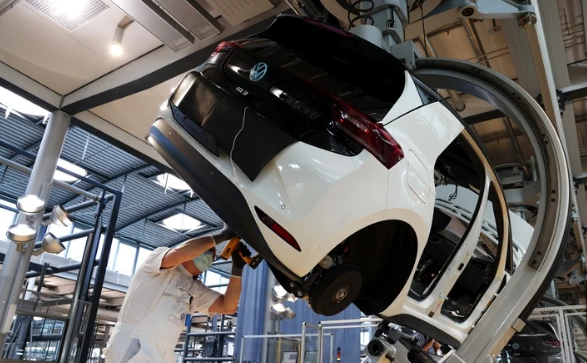
Shares in Volkswagen rose sharply in early trading in Frankfurt after the German automaker reached a major restructuring agreement designed to ease tensions with unions and shareholder Lower Saxony.
The company’s supervisory board approved the turnaround plan late Thursday, sending Volkswagen shares about 7% higher at the start of trading. The agreement marks the most extensive restructuring in the company’s 89-year history as it attempts to deal with rising costs, US tariffs, excess production capacity and growing competition from Chinese carmakers.
Under the plan, Volkswagen will reduce its global workforce by another 50,000 positions. That comes on top of 50,000 job reductions already planned, bringing the potential total to around 100,000 positions.
The company did not specify when the additional cuts would take place or how they would be divided among its brands and regions.
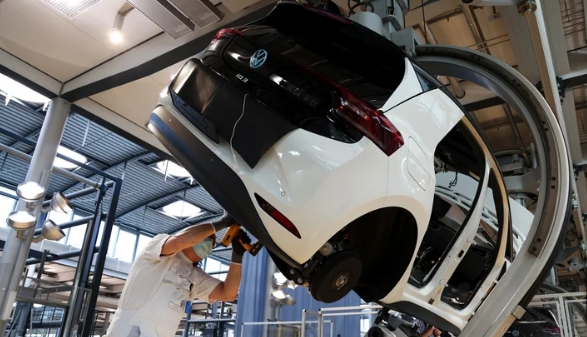
The restructuring also leaves the future of four German factories uncertain. Volkswagen is expected to examine options for its plants in Emden, Zwickau, Neckarsulm and Hannover, all of which face the gradual loss of vehicle models from 2031 onwards.
The agreement helped prevent a deeper dispute with Volkswagen’s powerful unions and Lower Saxony, which is the company’s second-largest shareholder. Management had considered calling an extraordinary general meeting to push ahead with its plans if negotiations failed.
That possibility has now been put aside, reducing the immediate threat of a confrontation between management and employee representatives.
The agreement also aims to simplify Volkswagen’s complex corporate structure and reduce the supervisory board’s role in some major decisions. Unions and Lower Saxony currently hold a majority of seats on the supervisory board.
Volkswagen Chief Executive Oliver Blume described the agreement as an important step for the company’s future.
“This is a strong signal for the future of the Volkswagen Group,” Blume said, adding that the company was taking responsibility for its workforce, business partners and industrial jobs around the world.
Industry analyst Ferdinand Dudenhoeffer said the agreement had created a period of relative calm, but warned that major decisions still lay ahead.
He expects discussions over the four German plants to dominate the next 10 months as Volkswagen works out how to manage their changing production roles.
The restructuring comes at a difficult time for the automaker. Volkswagen is facing higher costs linked to US import tariffs while its position in China has weakened. China remains the world’s largest car market and was once a major source of profits for the German group.
The latest plan is intended to improve Volkswagen’s competitiveness while addressing excess capacity and changing demand. Although the agreement has reduced tensions with unions and shareholders, difficult decisions over jobs, factories and production are still to come.


















You must be logged in to post a comment Login