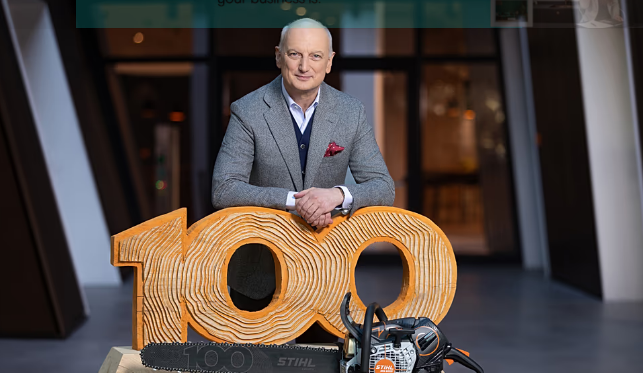
Germany needs sweeping economic reforms, including longer working hours without additional pay, to protect prosperity and preserve the country’s welfare system, according to STIHL chairman Nikolas Stihl.
Writing in an opinion piece for Euronews, Stihl said Germany’s economy had remained in crisis for years and required better conditions to restore growth. He warned that the country’s industrial base was steadily weakening, putting jobs, investment and living standards at risk.
Germany has lost about 15% of its industrial output over the past eight years, while around 15,000 industrial jobs are being lost each month, according to figures cited by Stihl.
The businessman said international pressures, including US tariffs, China’s industrial policies and geopolitical tensions, were affecting German companies. However, he argued that domestic problems were having a greater impact.
He pointed to excessive regulation, high energy prices, labour costs and taxes, along with concerns about education and workforce skills.
STIHL generated €5.48 billion in revenue in 2025 and employed 20,246 people worldwide. The company, founded by Andreas Stihl in 1926, is marking its centenary this year, with Nikolas Stihl representing the founder’s family.
Stihl said reforms planned by the German government in areas including healthcare, pensions, taxation and employment were useful compromises but did not go far enough. He urged politicians and employers to pursue further changes aimed at encouraging investment and economic growth.
Among his proposals are reducing bureaucracy, lowering labour costs, increasing research and development incentives and expanding the overall amount of work carried out in Germany.
A central part of his plan is a return to a 40-hour working week without additional pay. Stihl said Germany should encourage overtime, extend working lives where appropriate and make better use of unemployed and part-time workers. He also called for more skilled workers from overseas.
He argued that Germany’s ageing population would make it difficult for productivity gains from digitalisation and artificial intelligence to fully offset a shrinking workforce.
Stihl also proposed changes to sick pay, including payment from the second day of illness and ending telephone-based sick notes.
He said non-wage labour costs covering pensions, healthcare, long-term care and unemployment insurance should not exceed 40% of gross wages.
The STIHL chairman also wants stronger support for innovative industries, including artificial intelligence, robotics, biotechnology, medical technology, space technology and quantum computing. He called for faster approvals, tax incentives, access to venture capital and fewer regulatory barriers.
Stihl said Germany had successfully reinvented itself in the past and could do so again. He urged policymakers to act quickly, arguing that a competitive economy was essential to maintaining jobs, prosperity and a strong welfare state.
You must be logged in to post a comment Login