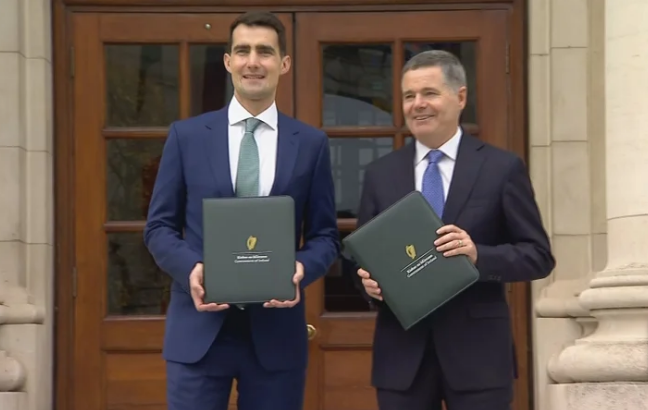
Minister for Finance Paschal Donohoe unveiled Ireland’s Budget 2026, pledging to “invest in our future” while safeguarding jobs, stability, and economic growth.
Speaking in the Dáil, Minister Donohoe said the first budget of the coalition government’s new term focuses on tackling housing shortages, boosting infrastructure, and supporting vulnerable citizens. “This Budget will secure jobs and stability at a time of global challenge,” he said.
Ireland’s economy is forecast to grow by 3.3% this year and 2.3% in 2026, with an additional 63,500 jobs expected by the end of the year. Inflation is projected to hover around 2% next year.
The Government’s National Development Plan will allocate €275 billion over the next decade to infrastructure, which Donohoe said would “boost growth and job creation” and enhance long-term national potential.
While overall spending will exceed previous targets, tax measures will be reduced to make room for social supports. The tax package has been cut by €150 million from earlier projections to fund “targeted supports for the most vulnerable.”
From January 1, the Universal Social Charge (USC) will see “targeted changes,” with the 2% rate band rising by €1,318 to €28,700. The national minimum wage will also increase by 65 cents to €14.15 per hour, ensuring full-time workers on minimum wage remain outside higher USC rates.
Other measures include extending the renters’ tax credit until 2028, cutting VAT on food, catering, and hairdressing services from 13.5% to 9% in July 2026, and extending the 9% VAT rate on gas and electricity until 2030. The research and development tax credit will rise from 30% to 35%.
Housing remains a key priority, with €200 million in extra funding for the Home Building Finance Ireland scheme. VAT on apartment sales will drop to 9% until 2030, while a new Derelict Property Tax will replace the existing Derelict Sites Levy to tackle urban blight.
A carbon tax increase will take effect tomorrow, raising the rate to €71 per tonne of CO₂, alongside a 50-cent increase on a pack of cigarettes.
Minister for Public Expenditure Jack Chambers announced €275 billion in funding for water, energy, and transport projects through 2035, including €4.7 billion for transport initiatives such as DART+, BusConnects, and the MetroLink project.
Social protection payments will rise by €10 per week, benefiting 1.5 million people. Additional supports include increases in child benefit, carer’s allowance, and the domiciliary care allowance.
Health will receive record funding of €27.4 billion, providing more hospital beds, community care, and mental health support. Education funding will increase to €13.1 billion, adding over 1,000 new teaching posts and 1,700 special needs assistants.
“The choices we make today will define Ireland’s future,” Minister Donohoe said, emphasizing that Budget 2026 aims to balance fiscal responsibility with investment in people and public services.