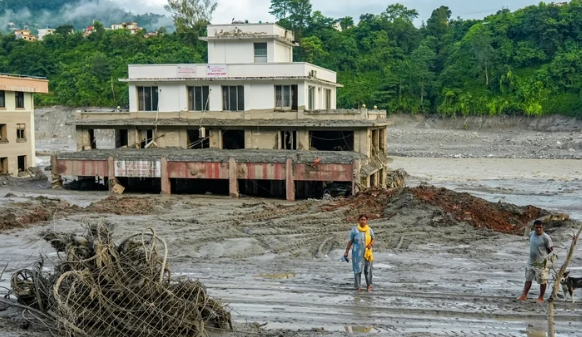
















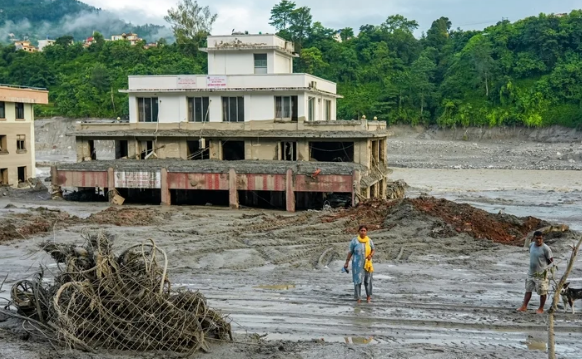
Rescuers in Nepal and Tibet are continuing a desperate search for thousands of people missing after a devastating flash flood swept through Himalayan valleys, destroying villages, roads, bridges and major infrastructure.
Nearly 3,000 people remain unaccounted for, including more than 2,400 in Nepal and at least 558 in Tibet’s Gyirong County. At least 540 foreign nationals are among the missing, many of them Hindu pilgrims travelling towards Tibet’s Mount Kailash.
Two Irish citizens, 46-year-old Santosh Sahu and 18-year-old Spandan Sahu, have also been named among those missing by Nepal’s Tourism Department.
Nepalese police put the latest death toll at 616, while authorities in Tibet have reported seven deaths. India has also recovered seven bodies from rivers flowing from Nepal, which are believed to be connected to the disaster.
Nepal’s disaster authority has added 933 hydropower workers to its missing persons list, highlighting the impact on the country’s extensive energy projects along the affected rivers.
Survivors described entire settlements being swept away within minutes. One said there was “nothing left” after communities near the river were destroyed. Families in Kathmandu have gathered at hospitals and other locations while waiting for information about missing relatives.
Finance Minister Swarnim Wagle said Nepal could require between $4 billion and $5 billion to rebuild. He stressed that the figure was an initial estimate and that officials were still assessing the damage.
The Red Cross said the disaster has caused enormous trauma and estimated that around 93,000 people could have been affected.
Rescue efforts have been complicated by the threat of additional flooding. The flood created large lakes from piles of ice, mud and debris, raising fears that further water surges could hit areas where emergency teams are operating.
Nepali police ordered rescuers to move to safer areas after receiving reports that a water barrier had burst on the Tibetan side. China temporarily suspended rescue work around Gyirong because of the danger before authorities said conditions had improved.
On the Nepalese side, military teams have been searching for workers trapped inside tunnels at the Trishuli 3A hydropower project. Army spokesman Raja Ram Basnet said helicopters had been deployed, although locating the tunnel entrances remained difficult.
About 350 workers and residents have been rescued from the site, while more than 100 people remain trapped.
Nepal has requested international assistance for specialised technical work rather than general search and rescue. Foreign Minister Shisir Khanal said the country needs expertise for tunnel rescues, restoring damaged transport and communications networks, identifying bodies, DNA testing and preserving remains.
India and China have also been asked to provide temporary Bailey bridges to restore access after around two dozen bridges were destroyed.
Among those caught in the disaster were pilgrims travelling to Mount Kailash. Indian pilgrim Sivaranjani Muthunathan said her bus was suddenly surrounded by fog, smoke and a torrent of water and debris. Vehicles nearby were swept away or buried, forcing passengers to climb out and scramble to higher ground.
With thousands still missing, rescuers continue to search devastated areas while authorities prepare for a major reconstruction effort.


















You must be logged in to post a comment Login