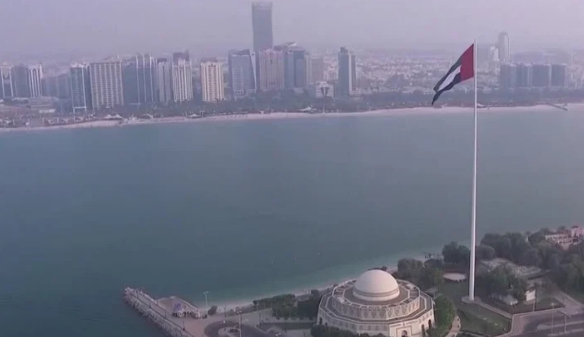













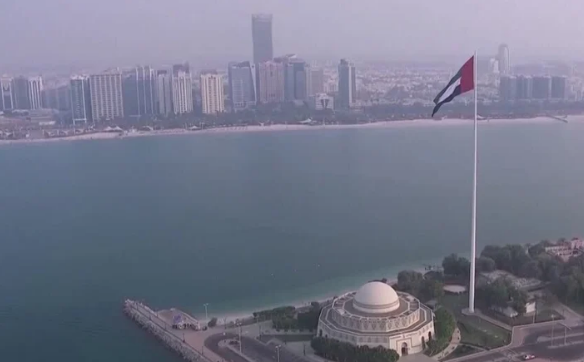
The United Arab Emirates said it detected two ballistic missiles launched from Iran on Wednesday, marking the first reported missile incident involving the UAE since an attack on Fujairah port on May 4.
The UAE Ministry of Defence said its assessment indicated that the missiles were aimed at maritime traffic. Both missiles fell into the sea and no impact on land was reported.
Iran rejected the UAE’s account. Foreign Ministry spokesperson Esmaeil Baghaei described the statement as “baseless”.
Following the missile warning, the UAE announced that it had suspended trade activities, commercial exchanges and financial transactions with Iran until further notice. The government said the decision was taken in response to an escalation that threatened regional and international peace and security.
The Defence Ministry said the UAE remained prepared to respond to threats and protect the country’s security.
Earlier, the UAE Interior Ministry sent residents a mobile alert warning of a potential missile threat. The alert was later lifted and residents were told that the situation was safe and normal activities could resume.
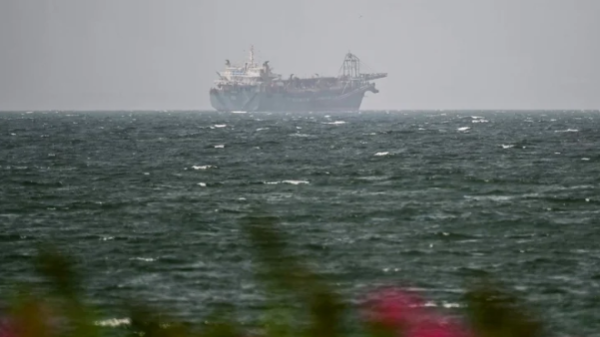
The latest incident comes after the UAE accused Iran of attacking vessels operated by state oil company ADNOC while they were travelling through the Strait of Hormuz. Iran has not acknowledged responsibility for those attacks.
Iran’s Islamic Revolutionary Guard Corps has previously warned vessels using the strait that they could face action if they are connected to countries viewed as hostile to Tehran or fail to comply with Iranian directives.
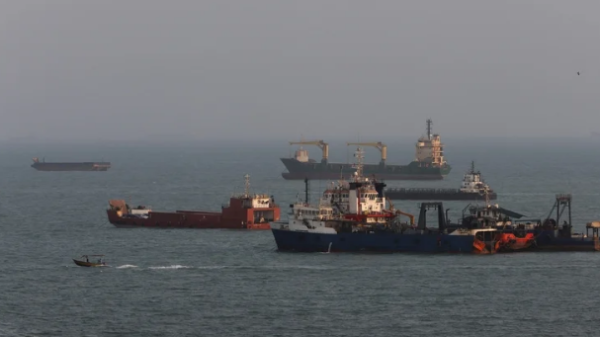
Shipping through the Strait of Hormuz has also slowed significantly amid continuing uncertainty over security conditions. Kpler data showed that six commodity vessels crossed the waterway on Tuesday, down from nine the previous day and below the recent daily average of 11.
The strait normally carries a major share of global energy supplies, accounting for about one-fifth of worldwide crude oil and liquefied natural gas shipments before the conflict disrupted traffic.
Two major Chinese shipping companies have kept their tankers away from the Strait of Hormuz and the Bab el-Mandeb passage since late July, according to tanker-tracking data and shipping sources.
Traffic through Bab el-Mandeb has increased, however. Kpler recorded 30 commodity-vessel transits over the latest weekend, compared with 19 the previous weekend, although no Saudi oil shipments were tracked.
Despite the escalation, Iran has continued to signal that it is open to negotiations. Mohammad Mokhber, an adviser to Supreme Leader Ayatollah Ali Khamenei, said Tehran remained willing to engage with Washington but would not regard negotiations as surrender.
The conflict has caused thousands of deaths, mainly in Iran and Lebanon, while attacks have affected military facilities and infrastructure across several countries.
Oil prices have also remained elevated. Brent crude reached about $126 a barrel during the conflict, roughly 75 percent above pre-war levels, before settling near $91.
US officials have warned that Washington could impose additional economic pressure on Iran if tensions continue.