
















Apple has lost its legal challenge against the European Union’s decision to classify its App Store and iOS operating system as “gatekeepers” under the Digital Markets Act (DMA), handing a significant victory to EU regulators seeking to curb the market power of major technology companies.
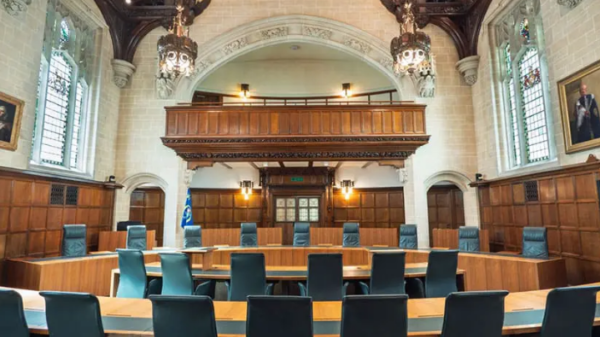
The ruling, delivered by the General Court in Luxembourg on Wednesday, supports the European Commission’s efforts to enforce the landmark legislation, which came into force in May 2023. The law imposes strict obligations on the world’s largest digital platforms to encourage greater competition and provide consumers with more choices.
Under the Digital Markets Act, companies designated as gatekeepers must comply with a range of requirements designed to prevent anti-competitive practices. Firms that fail to comply face penalties of up to 10 percent of their annual global revenue.
Apple, along with Meta and ByteDance, has challenged various aspects of the legislation since its introduction. In this case, Apple argued that the Commission had incorrectly classified its digital services under the new rules.
In its judgment, the General Court dismissed Apple’s challenge concerning the designation of its App Store and iOS operating system. The judges agreed with the European Commission’s position that Apple’s app stores across different devices serve the same core purpose.
“Irrespective of the devices in question, those stores have the same purpose, namely to connect app developers with end users in order to facilitate the distribution of software applications,” the court said.
The ruling means Apple’s App Store ecosystem will continue to be regulated under the DMA, requiring the company to comply with rules intended to make it easier for competing services and developers to operate on its platforms.
Apple also challenged the classification of iOS as a key gateway that businesses use to reach customers. Under the DMA, this designation requires Apple to improve interoperability, allowing competing services and products to work more effectively with its operating system.
The court also ruled that Apple’s legal challenge concerning its messaging platform iMessage was inadmissible. Judges noted that although iMessage had been classified as a number-independent interpersonal communications service, the designation alone does not create binding legal obligations because the service has not been listed as an important gateway under the DMA.
Following the decision, Apple criticized the legislation, maintaining that its requirements extend beyond what is legally justified.
The company said it believes the Digital Markets Act threatens privacy and security protections that it has built into its products over many years and could expose users to greater risks. Apple added that it would continue advocating for innovation and customer privacy in Europe.
The company still has the option of appealing the judgment on points of law before the Court of Justice of the European Union, the bloc’s highest court.
The decision is expected to strengthen the European Commission’s position as it continues enforcing the Digital Markets Act against major technology companies operating across the European Union.