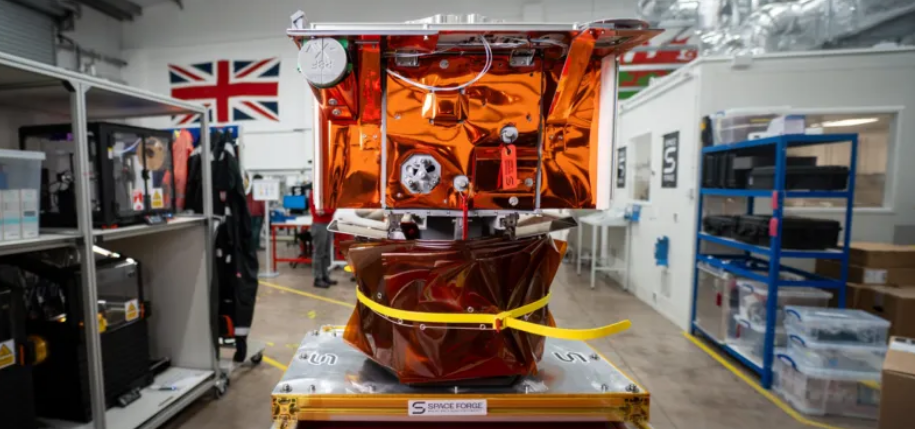
A Cardiff-based company is taking a major step toward producing high-quality materials hundreds of kilometres above Earth. Space Forge has launched a microwave-sized factory into orbit and successfully demonstrated that its furnace can reach temperatures of around 1,000C.
The company aims to manufacture semiconductors in space, which could then be used in electronics for communications infrastructure, computing, and transportation. Space offers ideal conditions for producing semiconductors because weightlessness allows atoms to align perfectly in a three-dimensional structure. The vacuum environment also prevents contaminants from entering, resulting in materials of exceptional purity.
“The work that we’re doing now is allowing us to create semiconductors up to 4,000 times purer in space than we can currently make here today,” said Josh Western, CEO of Space Forge. He added that these semiconductors could be used in 5G towers, electric vehicle chargers, and the latest aircraft.
The mini-factory was launched on a SpaceX rocket during the summer, and the team has been monitoring its systems from mission control in Cardiff. Veronica Viera, the company’s payload operations lead, shared images from inside the furnace, showing plasma glowing brightly at approximately 1,000C. “Seeing this image was one of the most exciting moments of my life,” she said. “This is one of the core ingredients we need for our in-space manufacturing process.”
Space Forge is now planning a larger space factory capable of producing semiconductor material for up to 10,000 chips. The company also needs to test technology to safely return the materials to Earth. A future mission will deploy a heat shield, named Pridwen after the legendary shield of King Arthur, to protect the spacecraft from the intense heat of atmospheric re-entry.
Other companies are exploring space-based manufacturing for a variety of products, including pharmaceuticals and artificial tissues. Libby Jackson, head of space at the Science Museum, said the field is still in its early stages. “In-space manufacturing is something that is happening now. By proving the technology, it opens the door for economically viable products that can be made in space and benefit people on Earth,” she said.
Space Forge’s progress highlights the potential for orbit-based production to revolutionize industries back on Earth. By using the unique conditions of space, the company hopes to deliver materials of unmatched quality and performance, creating opportunities for faster, more efficient electronics and other high-tech applications.
The successful operation of the furnace in orbit marks a milestone for Space Forge, bringing the vision of space-manufactured semiconductors closer to reality.