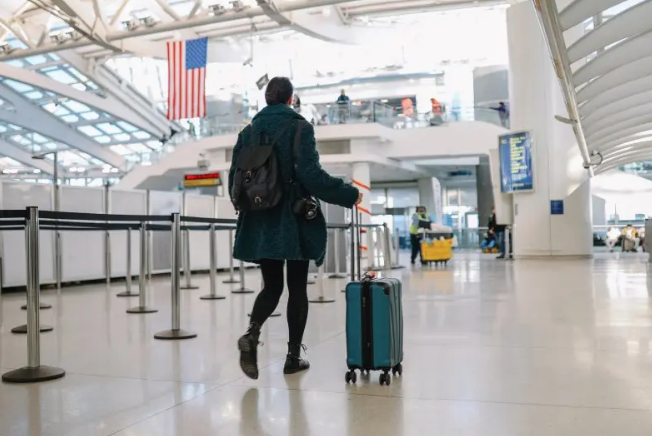
Tourism to the United States has seen a sharp downturn since President Donald Trump returned to office, as new policies and rising fees deter foreign visitors and shift global travel trends away from the U.S., raising concerns about the economic impact.
According to a May report by the World Travel & Tourism Council (WTTC), the United States is the only country among 184 analyzed expected to experience a decline in international visitor spending in 2025. While the WTTC forecasted a $12.5 billion shortfall compared to last year, Forbes estimates the real gap could be as much as $25 billion when factoring in pre-2025 growth expectations.
The decline comes as part of the fallout from the Trump administration’s sweeping “Big Beautiful Bill,” signed into law on July 4. The bill introduces a raft of immigration-related charges, including a new “visa integrity fee” of at least $250 for all nonimmigrant visa applicants. The fee, which applies to tourists, business travelers, students, and temporary workers, cannot be waived or reduced and will be adjusted annually for inflation.
A State Department spokesperson said the new charge aims to “strengthen immigration enforcement, deter visa overstays, and fund border security,” while the Department of Homeland Security noted that implementation will require coordination across multiple agencies.
The visa integrity fee joins several other increases introduced under the bill: the Electronic System for Travel Authorization (ESTA) fee has risen from $21 to $40, and the Form I-94 arrival-departure fee has jumped from $6 to $24. Citizens of Visa Waiver Program countries, including much of Europe, are still exempt from visa requirements, but not from these heightened charges.
Although travelers may apply for a refund of the visa integrity fee after their visa expires, the process is complex and years away from full implementation. The Congressional Budget Office (CBO) predicts that few will pursue refunds due to bureaucratic hurdles and long wait times. Immigration lawyer Steven Brown described the refund provision as “a refundable security deposit” that rewards visa compliance, but cautioned that the burden of proof lies entirely with the applicant.
Industry voices have expressed growing concern. Geoff Freeman, president of the U.S. Travel Association, called the legislation a mixed bag—applauding investments in air traffic control and customs operations while criticizing cuts to Brand USA and increased financial barriers to international visitors.
“Raising fees on lawful international visitors amounts to a self-imposed tariff on one of our nation’s largest exports: international travel spending,” Freeman said. “These fees discourage visitation at a time when travelers are already wary of the U.S. welcome experience and high prices.”
The downturn in tourism has broader economic implications, especially as the global travel market recovers post-pandemic. With more than a million nonimmigrant visas issued monthly, policy changes are expected to ripple across airlines, hotels, retailers, and other sectors dependent on international travelers.
As other nations ramp up efforts to attract global tourists, critics warn that America’s increasingly unwelcoming stance may erode its position as a top destination—potentially for years to come.