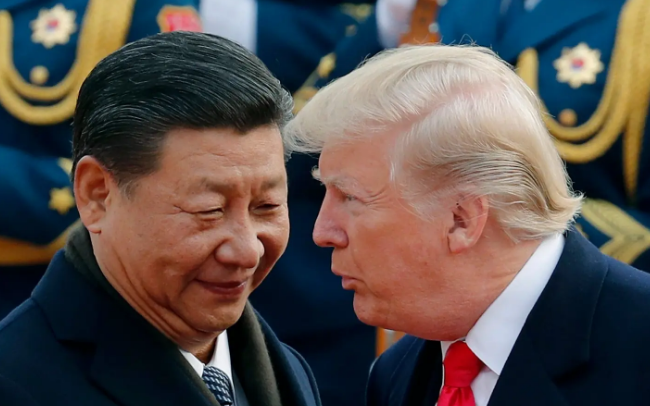
The United States and China have reignited trade tensions with a fresh round of tariffs and export restrictions, sparking concerns over global supply chains and the future of negotiations between the world’s two largest economies. Despite the renewed confrontation, both sides signaled that the moves may ultimately serve as leverage ahead of a key meeting later this month.
China last week announced sweeping new export controls on rare earth elements—critical materials used in electronics, renewable energy, and defense systems—requiring overseas buyers to obtain special licenses. The curbs, set to take effect from December 1, apply to a wide range of rare earth products, including holmium, europium, ytterbium, thulium, and erbium. Exports for military purposes or to entities on China’s control lists will be denied, while applications linked to artificial intelligence or semiconductor research will be reviewed case by case.
Beijing said the measures were designed to protect national security and prevent Chinese resources from being used in global military conflicts. However, Washington and its allies view the move as a potential escalation in the ongoing economic standoff.
In response, President Donald Trump on Friday announced a 100% tariff on Chinese goods—doubling existing rates—and new export restrictions on critical U.S. software, both due to take effect November 1. Trump initially threatened to cancel a planned meeting with Chinese President Xi Jinping in South Korea later this month but later told reporters he would still attend, saying, “Nov. 1 is an eternity for me.”
On Sunday night, Trump appeared to downplay the tensions, posting on Truth Social: “Don’t worry about China, it will all be fine! Highly respected President Xi just had a bad moment. He doesn’t want Depression for his country, and neither do I.”
U.S. Trade Representative Jamieson Greer called China’s rare earth curbs a “power grab” but suggested there was still room for diplomacy. “These measures aren’t in place yet, the tariffs aren’t in place yet,” he said. “We’ll see the markets calm this coming week as things settle out, hopefully.”
Beijing hit back, accusing Washington of “double standards” and highlighting that the U.S. maintains far more extensive export controls—over 3,000 items—compared to China’s roughly 900. The Chinese Ministry of Commerce also criticized U.S. sanctions on semiconductor and shipbuilding industries as “abusive” and “discriminatory.”
The renewed confrontation comes as the countries’ fragile trade truce, which lowered tariffs earlier this year, is set to expire on November 10. Analysts warn that another escalation could sharply disrupt global trade. Bloomberg Economics estimates that a 100% U.S. tariff increase could raise effective duties on Chinese goods to 140%, a level that could “shut down trade, not just raise costs.”
Still, some economists believe the latest moves may be tactical. Goldman Sachs analysts said both sides are likely to pull back before the measures take effect, possibly extending the tariff pause and paving the way for renewed negotiations.