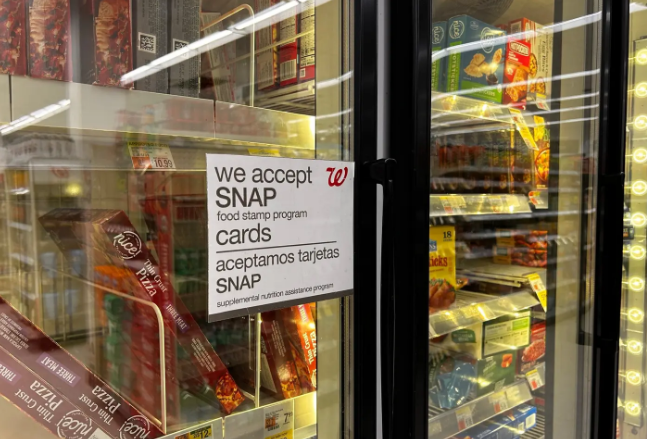
Concerns are rising across the United States as the federal government shutdown enters its third week, threatening critical social programs including the Supplemental Nutrition Assistance Program (SNAP), which provides food support to more than 41 million Americans.
Administered by the U.S. Department of Agriculture (USDA), SNAP—formerly known as food stamps—reduces the likelihood of food insecurity by nearly 30%, according to official data. However, as Republicans and Democrats remain deadlocked over spending and healthcare issues, millions of Americans could soon lose access to essential grocery benefits.
California Governor Gavin Newsom warned on Monday that the program may run out of funds by November if the impasse continues. “Trump’s failure to open the federal government is now endangering people’s lives and making basic needs like food more expensive,” Newsom said. The governor added that 5.5 million Californians rely on “CalFresh,” the state’s SNAP program, and could begin receiving delay notifications this week.
A letter sent by the USDA to regional SNAP directors on October 10 confirmed the potential disruption. “If the current lapse in appropriations continues, there will be insufficient funds to pay full November SNAP benefits for approximately 42 million individuals,” the letter stated. States have been instructed to hold benefit issuance files until further notice, meaning recipients may not receive payments next month.
Both parties are blaming each other for the crisis. U.S. Secretary of Agriculture Brooke Rollins said, “Because of the Democrat shutdown, there are not enough funds to provide SNAP for 40 million Americans come Nov. 1.” Meanwhile, Democratic governors have accused the Trump Administration of failing to secure funding for the program.
Several states have already issued warnings. In Texas, officials said benefits would stop if the shutdown continues past October 27. Pennsylvania halted some payments beginning October 16, while Illinois’ Human Services Department said 1.9 million recipients could lose benefits from November 1. Minnesota, Oregon, and New York have also warned that millions of residents are at risk of losing food assistance.
“This is a cruel and unacceptable situation,” said Oregon Governor Tina Kotek. “President Trump should focus on feeding families by negotiating a deal with Congress.”
The SNAP program has faced increasing strain under new federal policies that have shifted greater financial responsibility to state governments. With food prices continuing to climb and 13.5% of U.S. households already experiencing food insecurity, the potential interruption of SNAP payments could push millions closer to hunger.
Unless Congress and the White House reach a funding agreement soon, experts warn that the impact could be felt nationwide—at grocery stores, food banks, and dinner tables across America.