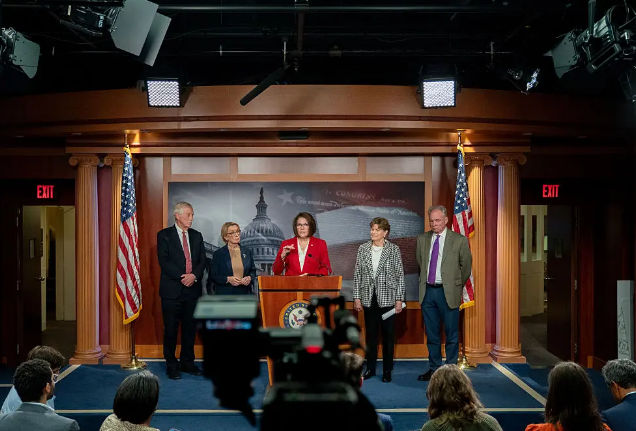
After 41 days, the longest federal government shutdown in U.S. history showed signs of easing on Sunday as eight Democratic Senators joined Republicans to pass a stopgap funding measure. The vote marked the first concrete move to reopen the government, though the shutdown’s impact has already been severe, with hundreds of thousands of federal workers furloughed, thousands of flight delays, and millions facing reduced food assistance.
President Donald Trump called the development a sign that the shutdown was “getting close” to an end. The continuing resolution would fund the government through January 30, 2026, while also reversing mass firings of federal employees and guaranteeing back pay. Additional provisions include a prohibition on further workforce reductions until the end of January.
The legislation also contains a larger appropriations package, funding military construction, veterans’ affairs, the legislative branch, and the Department of Agriculture through September 2026. It restores funding for healthcare programs, including the Women, Infants, and Children (WIC) assistance program and the Supplemental Nutrition Assistance Program (SNAP), which the Trump Administration had curtailed. Funding for Congress’s security and the U.S. Capitol Police is also included.
The deal emerged after weeks of closed-door negotiations between Senate Democrats, Republicans, and the White House. The eight Senators—Jeanne Shaheen, John Fetterman, Tim Kaine, Catherine Cortez Masto, Dick Durbin, Maggie Hassan, Angus King, and Jacky Rosen—agreed to support the bill in exchange for a promised future vote on extending Affordable Care Act premium tax credits. Senate Majority Leader John Thune pledged the vote would take place in mid-December, though no similar commitment was offered by House leadership.
Not all Democrats were satisfied with the arrangement. Senate Minority Leader Chuck Schumer voted against the bill and criticized Republicans for not agreeing to a broader compromise on healthcare. Other Democratic Senators, including Richard Blumenthal, Bernie Sanders, and Elissa Slotkin, called the promise of a future vote vague and inadequate. Rep. Alexandria Ocasio-Cortez also expressed concern, highlighting that the average ACA benefit per person is significantly higher than SNAP payments, arguing the vote should protect Americans’ lives.
House Minority Leader Hakeem Jeffries said Democrats would oppose the bill in the House, where Republicans hold only a slim majority. “We will fight the GOP bill in the House of Representatives, where Mike Johnson will be compelled to end the seven-week Republican taxpayer-funded vacation,” Jeffries said.
Despite the Senate passage, the funding only secures government operations through January, leaving room for potential delays and renewed stalemates if Congress does not reach further agreements. Until the House acts, the federal workforce and Americans relying on government services face continued uncertainty.
The Senate vote reflects both a tactical compromise and a source of internal party tension, highlighting the delicate balance between reopening government operations and advancing longer-term priorities such as healthcare.