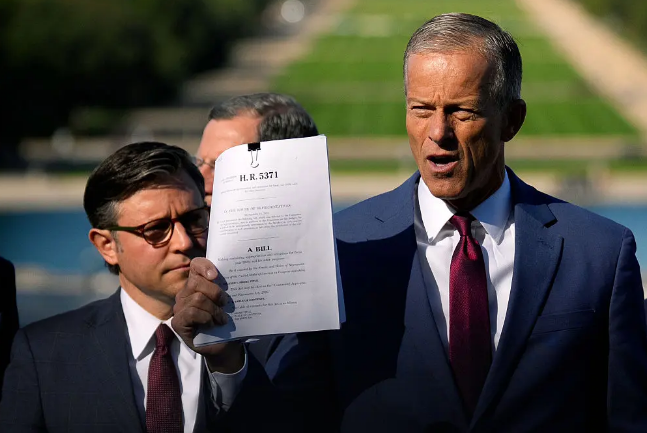
As the U.S. government shutdown stretches into its second month, millions of Americans are bracing for the real-life impact of stalled federal funding. Beginning Saturday, November 1, Supplemental Nutrition Assistance Program (SNAP) benefits—commonly known as food stamps—are set to run out, while open enrollment for health insurance kicks off with sharp premium increases, leaving families struggling to afford both food and coverage.
The shutdown, which began on October 1, has shown little sign of resolution. Lawmakers on both sides of the aisle remain entrenched, each claiming political advantage as critical programs grind to a halt. Congressional aides and lobbyists suggest that a deal may not come until mid-November or even December.
The expiration of SNAP funding will affect roughly 42 million Americans, or one in eight people nationwide. The Department of Agriculture has confirmed that about $9.2 billion in food assistance will stop this weekend, a decision expected to ripple through the wider economy—impacting grocery stores, truck drivers, farmers, and gas stations. Economists estimate that every dollar spent on SNAP generates between $1.50 and $1.80 in economic activity.
Republican-led states are expected to feel the pinch most acutely. Of the 30 states won by Donald Trump in the last election, 25 rely more heavily on SNAP than the national average of 12%. In Louisiana—home to House Speaker Mike Johnson—nearly 18% of residents receive assistance. In South Dakota, 70% of SNAP households have children, and across Trump-aligned states, the proportion of beneficiaries with kids exceeds the national average of 62%.
Meanwhile, the shutdown’s second major casualty is the healthcare system. Earlier this year, President Trump’s administration reallocated funds from Affordable Care Act subsidies—introduced during Joe Biden’s presidency—to finance a $3.4 trillion tax law favoring higher-income earners. As a result, about 22 million Americans risk losing financial support for their health insurance, with 4 million expected to forgo coverage altogether.
New rate filings show that federal insurance plans will rise by 30% on average, while state-level plans could climb by 17%. Analysts from the Urban Institute warn that red states again will bear the heaviest burden. Subsidized healthcare coverage is projected to drop by 61% in Louisiana, 60% in Texas, and 53% in Georgia. In Mississippi, the uninsured rate could jump by 65%.
Despite growing public concern, Congress remains gridlocked. Some Republicans, including Missouri Senator Josh Hawley, are pushing for a temporary reopening of SNAP funding, while others hint at a possible extension of health subsidies if both sides can agree on a longer-term funding deal.
For now, families across the country face an uncertain weekend—parents wondering if their EBT cards will still work, and millions bracing for rising healthcare costs as Washington remains at an impasse.