A federal judge has stopped the Trump Administration from suspending food assistance for millions of Americans amid the ongoing government shutdown, issuing an emergency ruling just hours before benefits were set to be cut off.
U.S. District Court Judge Jack McConnell of Rhode Island ordered the Administration to release at least part of the Supplemental Nutrition Assistance Program (SNAP) payments scheduled for November 1. His ruling came shortly after a similar decision by Judge Indira Talwani of Massachusetts, who declared the suspension of the program “unlawful” and directed federal officials to explain how they intend to continue funding it.
The twin rulings temporarily prevent the Administration from cutting off food assistance for roughly 42 million Americans who depend on SNAP — commonly known as food stamps — as the shutdown drags into another week.
The Justice Department had argued that the government no longer had congressional authorization to fund the program and that it was up to the Administration to decide whether to use a $6 billion contingency fund to cover benefits. But Judge McConnell rejected that position, ordering the White House to “timely or as soon as possible” access those funds to issue at least partial payments to recipients.
“Congress has put money in an emergency fund,” Judge Talwani said during Thursday’s hearing. “It’s hard for me to understand how this isn’t an emergency when there’s no money and a lot of people are needing their SNAP benefits.”
Under Judge Talwani’s order, the Administration must submit a detailed plan by Monday outlining how it intends to fund November’s payments — either partially through contingency reserves or fully through other available sources.
While the rulings ensure that some benefits will continue, the timeline for disbursement remains uncertain. Officials previously warned that distributing the payments could take weeks, and recipients may receive reduced amounts due to limited funds. Reloading the debit cards used for SNAP can take up to two weeks, according to the Associated Press.
The Justice Department is expected to appeal both rulings, which could further delay payments. However, legal experts say the decisions underscore the courts’ unwillingness to allow a lapse in food assistance during a politically charged shutdown.
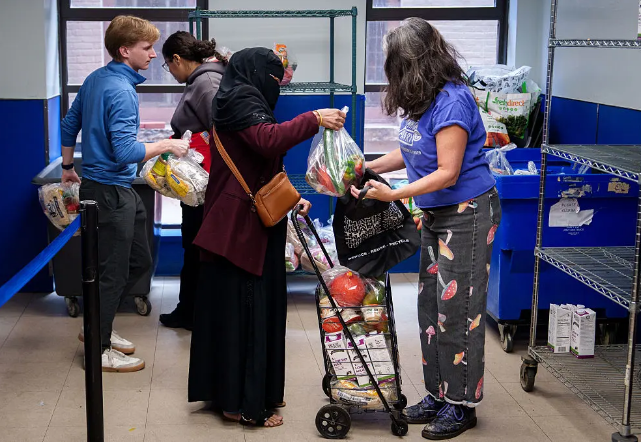
Food banks and anti-hunger advocates have warned that halting SNAP benefits would have catastrophic consequences for low-income families. “This is a man-made disaster,” one food bank director said earlier this week, warning that local charities could not meet the sudden surge in demand.
For now, the emergency rulings mean that millions of families will continue to receive at least part of their food assistance — though uncertainty remains over how long those payments will last as the shutdown continues.