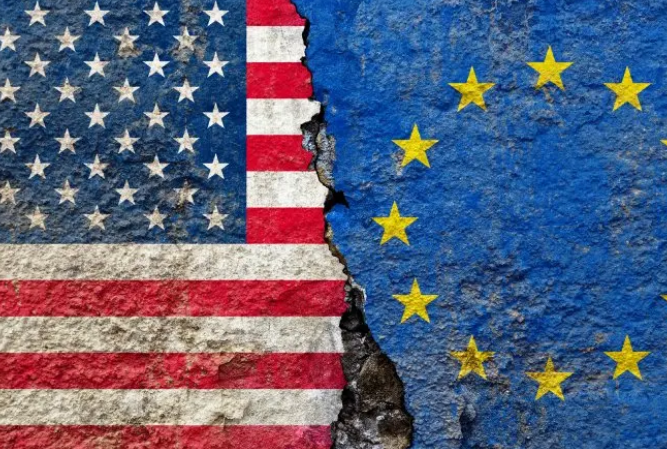
The European Union has extended its suspension of retaliatory tariffs against the United States until August 1, in a final bid to reach a trade agreement before President Donald Trump’s threatened 30% duties on EU goods take effect.
EU trade ministers met in Brussels on Monday, expressing growing frustration over what they described as Washington’s unpredictable and shifting stance on trade. Despite months of negotiations, the EU now faces the prospect of sweeping tariffs, which could disrupt one of the world’s largest bilateral trade relationships.
“Thirty percent is absolutely unacceptable,” said EU trade commissioner Maroš Šefčovič, adding that the bloc is preparing a “robust and proportionate” response if talks collapse. Danish Foreign Minister Lars Løkke Rasmussen, whose country currently holds the EU’s rotating presidency, echoed the sentiment, warning of a strong and united EU reaction if diplomacy fails.
Trump had initially announced tariffs as high as 50% in April as part of a broader push to reduce U.S. trade deficits. He later paused implementation to allow room for negotiations. However, that truce now appears fragile, with a flurry of new tariff threats targeting major trade partners—including Canada, Japan, and the EU—due to take effect from August 1.
The EU has prepared countermeasures targeting €72 billion ($84 billion) worth of U.S. goods, including aircraft, automobiles, bourbon, and machinery. Officials say these tariffs could be triggered immediately if the U.S. imposes its planned duties. Previous countermeasures worth €21 billion ($25 billion) have been delayed twice this year.
Despite the impasse, Trump said Monday he remains open to negotiations. “We’re always open to talk… they’re coming over,” he told reporters.
Experts warn that Trump’s erratic trade policy is undermining trust and making negotiations more difficult. “The EU will be less likely to offer concessions when they cannot rely on a stable negotiation process,” said Wayne Winegarden of the Pacific Research Institute.
Concerns within the EU are also mounting over potential U.S. retaliation beyond trade. Some member states worry that pushing back too hard could jeopardize U.S. support for NATO or Ukraine. However, many EU leaders argue that the bloc must show strength. “You need to show force and unity,” said French Minister Delegate Benjamin Haddad.
The uncertainty has already pushed the EU to accelerate trade talks with Southeast Asian nations. On Sunday, the EU and Indonesia reached a political agreement on a comprehensive economic partnership. The bloc is also pursuing renewed agreements with Thailand, Malaysia, and the Philippines, and is resuming dialogue with China later this month.
As the August deadline looms, the EU’s strategy remains focused on negotiation—but the window is narrowing. “We’re running out of time,” Šefčovič warned. “But we will continue to engage, because walking away without effort is not an option.”