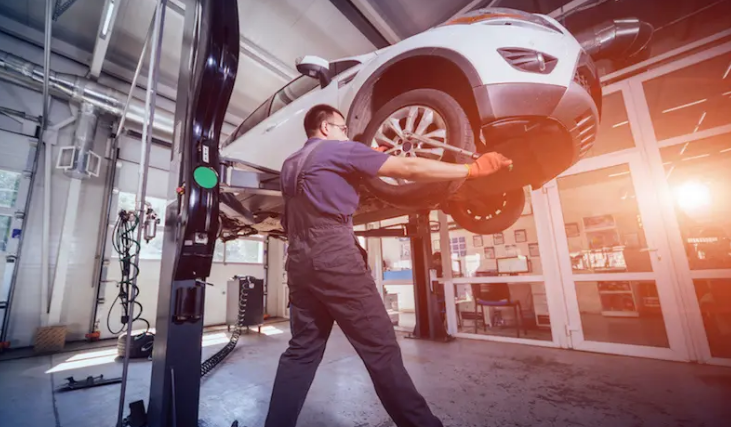
Britain is heading towards a significant shortage of mechanics trained to service electric vehicles, raising concerns that the country’s transition to cleaner transport could outpace the workforce needed to support it.
New analysis from the Institute of the Motor Industry suggests the UK could be short of 44,000 EV-qualified technicians by the time petrol and diesel car production is phased out, under current government targets. Only around a quarter of the country’s mechanics are currently trained to work on electric vehicles, leaving a substantial gap in workforce readiness.
The distribution of EV expertise is uneven, with larger national chains such as Kwik-Fit employing the majority of qualified technicians. These operators have the scale and resources to invest in training and benefit from servicing contracts with corporate EV fleets. Smaller, independent garages, which make up a large part of the UK’s automotive repair network, remain hesitant to upskill. Many owners cite high training costs, limited local demand, and uncertainty over how quickly the transition to electric vehicles will proceed.
The economics of EV servicing pose additional challenges. Electric vehicles typically have fewer moving parts and require less routine maintenance than petrol or diesel models. Traditional revenue streams, such as engine and clutch repairs, are largely absent in EVs, while routine checks like MoTs demand less labour. Some garage owners fear that investing in EV training may not deliver sufficient short-term returns.
Regional disparities in electric vehicle adoption are also contributing to the problem. Outside major urban centres, demand for EV repairs remains low, forcing some owners to travel long distances to access qualified services. This highlights a growing disconnect between national policy and local infrastructure, both in terms of servicing and charging networks.
Despite these obstacles, industry analysts say the transition to electric vehicles is inevitable. Manufacturers have invested heavily in electrification, and EVs are expected to dominate new car sales within the next decade. Quentin Le Hetet of automotive analysts GiPA predicts electric vehicles could outnumber petrol and diesel cars on UK roads by the mid-2030s.
Experts warn that without targeted support, independent garages risk being left behind, while larger operators and manufacturer-approved service centres capture a growing share of the market. Peter Wells of the Centre for Automotive Industry Research said the shift could fundamentally reshape the sector, with manufacturers increasingly controlling access to repair data and systems, raising concerns about competition and pricing.
The Institute of the Motor Industry has called for increased funding to support training and workforce development, cautioning that without intervention, the skills gap could become a major bottleneck in the UK’s net zero ambitions. Policymakers face a dual challenge: ensuring the EV transition is not only technologically feasible but also economically sustainable for the country’s automotive repair industry.
For the thousands of garages across the UK, the message is clear: adapt to the electric future or risk being left behind as the automotive sector undergoes its most profound transformation in decades.