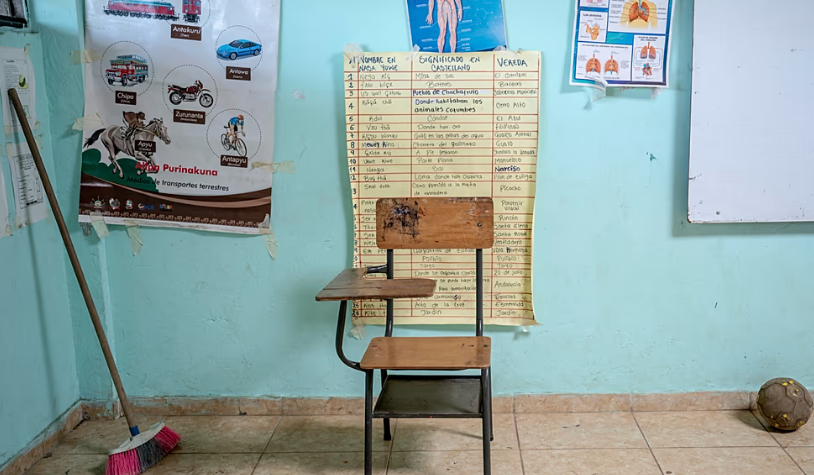
As the world marks World Teachers’ Day, UNICEF has raised alarm over a growing global education crisis, particularly in conflict-affected regions, where millions of children remain out of school and teachers continue to face chronic underinvestment.
World Teachers’ Day, established in 1994 to commemorate the 1966 Paris Recommendation on the Status of Teachers, highlights the essential role of educators in shaping the future. However, this year’s observance comes amid worsening challenges in the education sector, according to UNICEF’s 2024 report.
The report reveals that the number of out-of-school children and young people (OOSC) has risen to 272 million in 2023, up from 265 million a decade ago. The agency warns that this figure could climb to 278 million due to a sharp decline in global education funding. Official Development Assistance (ODA) for education is expected to fall by USD 3.2 billion — a 24% decrease from last year.
UNICEF also found that only 31% of countries have effective teacher professional development systems, far below the global target of 64%. This underinvestment, the agency warns, threatens both the quality of education and the ability to retain trained educators.
“Teachers are at the heart of quality education, yet they are undervalued and under-supported,” said Nicola Graziano, President of UNICEF Italy. “No child should be deprived of the right to learn and build a future. Ensuring trained, motivated and supported teachers means not only offering knowledge, but also protection, hope and opportunities for life.”
The figures highlight the severity of the situation: 234 million children worldwide need support to access quality education — 35 million more than just three years ago. Of these, 85 million do not attend school at all. Girls make up 52% of this group, while 17% are refugees or internally displaced, and over 20% are children with disabilities.
The crisis is most severe in conflict zones. In Gaza, more than 1.46 million children struggle to access education, with 588 schools damaged or destroyed by mid-2025. In Sudan, 17 million of the 19 million school-age children are out of school, while in Haiti, over 1.4 million children urgently need education support amid escalating violence.
“Investing in teachers means investing in the future,” UNICEF said, calling on governments and the international community to urgently increase funding. “Every child, everywhere, deserves the presence of a teacher by their side,” Graziano added.
On this World Teachers’ Day, UNICEF paid tribute to educators who continue to teach in the most difficult circumstances, urging global action to ensure that education remains a right, not a privilege.