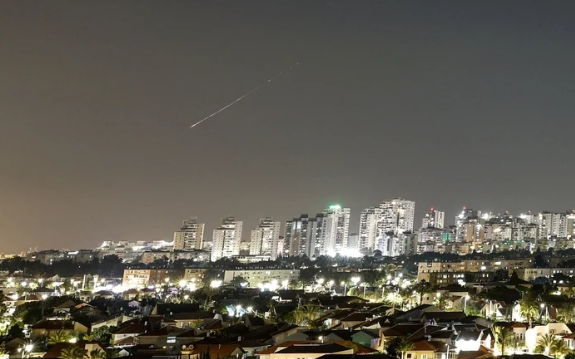
Israel and Iran have exchanged fresh attacks for the first time since a ceasefire took effect two months ago, raising fears of a renewed regional escalation despite repeated calls for restraint from international leaders, including US President Donald Trump.
The latest round of violence followed Iranian missile fire toward Israel, which Tehran said was retaliation for an earlier Israeli strike on Beirut’s southern suburbs, a stronghold of the Iran-backed Hezbollah movement. Israel responded with strikes targeting Iranian military-linked sites, including a petrochemical facility, as tensions that had briefly eased now appear to be unraveling.
Explosions were reported in Jerusalem and Ramallah as Israeli air defence systems intercepted incoming missiles. Iran’s Revolutionary Guards said they had targeted Israel’s Nevatim and Tel Nof air bases, describing the attacks as a direct response to what they called “Zionist aggression.”
At the same time, Yemen’s Houthi rebels announced a missile strike on Israel and declared a ban on Israeli shipping through the Red Sea, raising concerns over renewed disruptions to one of the world’s most important trade routes.
The renewed exchanges came shortly after President Trump urged both sides to avoid further escalation. Speaking in media interviews, Trump said Iran should “get back to the table,” while also insisting he alone directed US policy decisions in the region. Israel, however, accused Tehran of miscalculation and warned of continued retaliation if attacks persist.
Diplomatic pressure has intensified as the European Union and China both called for an immediate return to negotiations. EU foreign policy chief Kaja Kallas urged both sides to resume talks, while Beijing warned that renewed hostilities risk further destabilising global security.
Iran has maintained that any long-term agreement must also address Israel’s military campaign in Lebanon, where clashes involving Hezbollah continue. Tehran has also expanded its regional response, including a separate strike on targets in Iraqi Kurdistan, which it claims are linked to hostile foreign interests.
In Lebanon, Israeli strikes on Beirut’s Dahiyeh district killed two people and wounded at least 20, according to health authorities. Israel said the attack targeted a Hezbollah command centre following rocket fire into northern Israel.
Iranian officials, including parliament speaker Mohammad Bagher Ghalibaf, accused the United States of enabling Israeli operations and warned that US and Israeli assets could now be considered legitimate targets. Military commanders in Tehran said Israel had crossed “all red lines.”
The renewed violence has already affected global markets, with crude oil prices rising amid concerns over shipping security in the Strait of Hormuz, a key route for global energy supplies.
On the ground, civilians reported growing hardship. In Iran’s Ahvaz region, residents described worsening economic pressure and uncertainty, with one fitness trainer saying daily life had become “a struggle to survive.”
Despite the escalation, limited diplomatic engagement continues behind the scenes, including recent visits by regional officials attempting to revive communication channels between Tehran and Western governments.