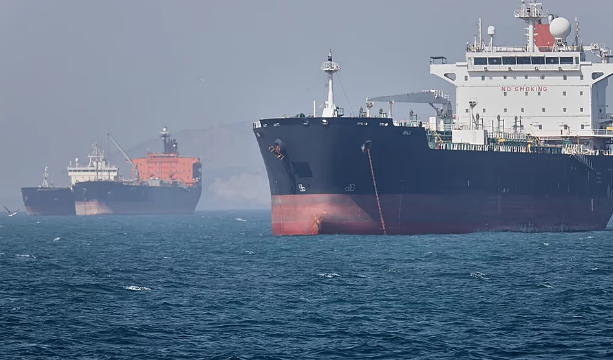
Iranian oil shipments have passed through a US naval blockade in the Strait of Hormuz for the first time in two months, according to maritime intelligence reports, as Washington and Tehran move toward finalising a peace agreement aimed at ending their ongoing conflict.
Tanker tracking firm TankerTrackers reported that at least two supertankers operated by Iran’s National Iranian Tanker Company (NITC), identified as Diona and Hero2, successfully crossed the blockade line on Wednesday. The vessels were carrying a combined total of approximately 3.8 million barrels of crude oil.
A third vessel, the NITC ship Stream, was also reported to be approaching the blockade zone from Pakistan’s exclusive economic zone, where it had been waiting for several weeks to enter Iranian waters.
The blockade was first imposed on 13 April, when tensions escalated sharply between the United States and Iran. It restricted movement of vessels entering and leaving Iranian ports along the Persian Gulf and Gulf of Oman, effectively disrupting a major global energy shipping corridor.
The developments come after a tentative peace agreement was announced over the weekend by Pakistani officials acting as intermediaries, alongside US President Donald Trump. The proposed deal reportedly includes an immediate halt to military operations across multiple fronts, including Lebanon, where fighting linked to the wider regional conflict has continued.
Pakistan’s Prime Minister Shehbaz Sharif said an official signing ceremony is scheduled to take place on 19 June in Switzerland. He described the agreement as a step toward ending hostilities, although the situation on the ground remains uncertain. Lebanese authorities reported renewed Israeli strikes in southern Lebanon on Wednesday, raising questions about the durability of the ceasefire framework.
President Trump later confirmed the agreement in a post on social media, stating that the deal with Iran was “now complete.” He also announced the lifting of the US naval blockade and said the Strait of Hormuz would be reopened, describing it as a measure to allow global oil shipments to resume freely.
While full details of the agreement have not yet been published, Trump has repeatedly said that the deal includes two central conditions: the reopening of the Strait of Hormuz and a commitment from Iran not to pursue nuclear weapons.
The announcement has prompted calls for greater transparency from US lawmakers. Senate Democratic Leader Chuck Schumer urged the administration to provide Congress with a full briefing and release the terms of the agreement publicly, warning that the American public must be informed about the scope and consequences of the deal.
As diplomatic preparations continue, shipping analysts say the partial resumption of tanker movements could signal the first steps toward restoring stability in one of the world’s most critical energy chokepoints, though broader political uncertainties remain unresolved.