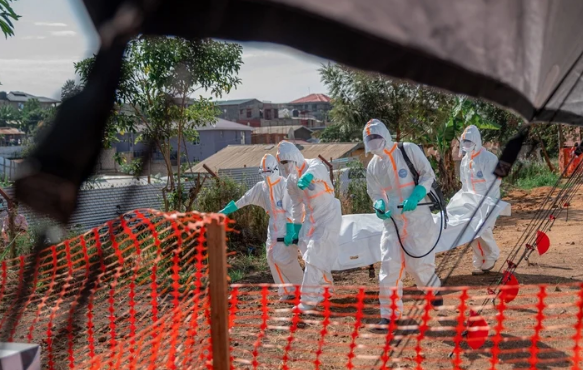
The number of confirmed Ebola cases in the Democratic Republic of Congo has climbed to 956, including 247 deaths, according to health authorities, as concerns grow over the speed and scale of the outbreak in the country’s northeast.
The latest figures mark an increase from Friday’s tally of 933 confirmed cases and 245 deaths, highlighting a continuing upward trend despite intensified containment efforts. Health officials say the situation is deteriorating rapidly, with transmission believed to have been occurring undetected before the outbreak was officially declared on 15 May.
The World Health Organization has warned that it is struggling to keep pace with the spread of the virus. Marie-Roseline Belizaire, WHO Africa emergencies chief, said the outbreak remains “serious” and is “evolving so fast,” stressing that response teams are working urgently to contain it.
The current outbreak is caused by the rare Bundibugyo strain of Ebola, for which no approved vaccine is available, complicating efforts to slow infections. Health teams on the ground have been expanding surveillance and contact tracing, but officials say logistical challenges in remote areas continue to hinder progress.
The WHO has also expressed concern that undetected transmission in the early stages allowed the virus to spread more widely before emergency measures were fully implemented.
Earlier this week, the head of Africa’s Centres for Disease Control and Prevention raised the alarm over the potential scale of the crisis. Director-General Jean Kaseya warned that the outbreak could become the worst in the country’s history if urgent gaps in response capacity are not addressed.
“If we don’t stop the outbreak very soon it will be worse than what we had in West Africa and eastern DRC,” Kaseya said during a virtual briefing with African leaders and international donors in Burundi. He also cautioned that failure to contain the virus quickly could result in costs running into billions of dollars.
Health agencies are now focusing on strengthening coordination between national and international teams, improving access to affected communities, and accelerating response measures. However, officials acknowledge that insecurity and limited infrastructure in northeastern DRC remain significant obstacles.
The outbreak continues to place pressure on already stretched health systems in the region, with authorities urging increased global support to prevent further escalation.