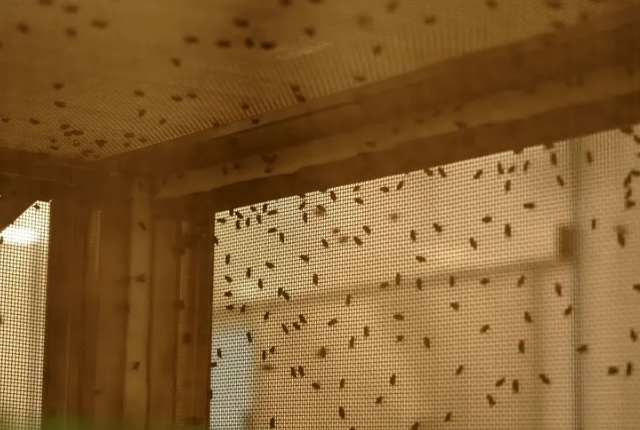
The United States is stepping up efforts to contain the return of the New World screwworm, a parasitic fly whose flesh-eating larvae pose a serious threat to livestock, pets and wildlife. Nearly two dozen cases have been confirmed in domestic animals in Texas, raising concerns among ranchers and animal health officials while prompting debate over the most effective way to stop the pest’s spread.
The US Department of Agriculture (USDA) first confirmed the latest outbreak in early June after detecting the parasite in a calf in Texas. Since then, infections have been identified in cattle, a goat and a dog that was diagnosed in Texas but resides in neighboring New Mexico.
Unlike ordinary maggots that feed on dead tissue, screwworm larvae consume living flesh. Female flies lay eggs in open wounds or sensitive areas such as the eyes, nose or mouth of mammals. If left untreated, the infestation can cause severe infections, damage blood vessels and lead to death within two weeks.
Officials stressed that screwworm is not contagious in the traditional sense. Animals become infected only when flies deposit eggs on exposed tissue. The USDA also said the parasite does not pose a food safety risk, and people cannot become infected by eating meat from affected animals.
Veterinarians are urging pet owners and livestock producers to carefully monitor animals for wounds that fail to heal or show signs of infection. White eggs, unusual discharge or rapidly worsening injuries should be examined immediately by a veterinarian.
To contain the outbreak, the USDA has resumed releasing millions of sterile male flies across affected areas. The technique, first used successfully in the 1960s, works by allowing sterile males to mate with wild females, producing eggs that never hatch. The strategy helped eliminate screwworm from the United States decades ago and remains the federal government’s primary control method.
The agency has also suspended cattle and horse imports from Mexico while expanding surveillance efforts with authorities in Mexico and Central America, where the parasite has steadily moved north in recent years. Experts attribute its return to warmer temperatures and increased livestock movement across the region.
However, Texas Agriculture Commissioner Sid Miller has argued that sterile fly releases alone are insufficient. He has urged the federal government to combine the program with insecticide-treated fly traps, saying a similar approach helped control a major outbreak in the 1970s.
USDA officials maintain that sterile flies remain the safest and most effective long-term solution, although experts acknowledge current production levels are not yet sufficient to overwhelm the wild population. Additional production facilities are expected to increase the supply of sterile flies over the next two years.
Researchers are also evaluating new technologies that would produce only sterile male flies, eliminating females from the release process and improving efficiency.
Animal health authorities continue to encourage ranchers, veterinarians and pet owners to report suspected cases promptly. Officials say rapid detection, treatment and coordinated surveillance remain critical to preventing the parasite from spreading beyond the current outbreak areas.