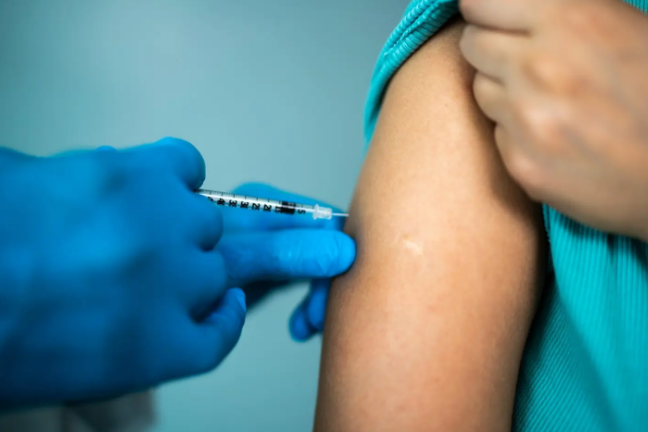
Vaccines, once widely supported across political parties in the United States, have become a deeply divisive issue, a new Pew Research Center survey shows. The study highlights how politics now heavily shapes Americans’ views on immunizations, including routine childhood vaccines and the latest COVID-19 shots.
The survey polled more than 5,000 adults about vaccine safety, effectiveness, and their plans to receive the newest COVID-19 booster. The timing comes after the Centers for Disease Control and Prevention (CDC) revised its COVID-19 guidance, shifting from an annual recommendation for most Americans to advising only older adults and those with weakened immune systems to get the shot.
Despite the change, nearly half of Americans (44%) were unaware of the CDC’s updated guidance. Among those who knew, 63% said it had no impact on their decision to get vaccinated. Overall, 59% of respondents indicated they did not intend to receive the latest COVID-19 vaccine, roughly the same percentage as last year. “It’s a reality check about what isn’t breaking through [about vaccine recommendations],” said Eileen Yam, managing director of science and society research at Pew.
The survey revealed a striking political divide. About 83% of Republicans or Republican-leaning respondents said they would not take the latest COVID-19 shot, compared with 44% of Democrats. This gap is wider than in previous years, reflecting trends that began during the pandemic and have continued to grow. Support for routine childhood vaccinations has also declined among Republicans, even as most Americans agree that vaccines are safe and effective.
For instance, 78% of Republicans and 92% of Democrats said the benefits of the measles, mumps, and rubella (MMR) vaccine outweigh the risks. Yet backing for school mandates requiring vaccines has dropped sharply, particularly among Republicans, with support for MMR mandates falling to 52% from 79% in 2019. Democrats remain more likely to favor guidance from medical scientists, while Republicans prioritize parental control over vaccine decisions.
The findings suggest the divide is less about trust in vaccines themselves and more about who should make decisions regarding immunization. Many Republicans recognize the public health benefits but oppose mandatory requirements imposed by schools or the government. “It boils down to who gets to decide,” Yam said.
The survey points to ways policymakers and health communicators could address these differences. Understanding regional and political variations in vaccine attitudes may help shape strategies that respect personal choice while maintaining high vaccination rates. “Having a finger on the pulse of what policy measures resonate or not in different pockets of the country is something both policymakers and health communicators need to keep in mind in any conversations about vaccines,” Yam said.
As debates over mandates and COVID-19 boosters continue, the survey underscores the enduring influence of politics on Americans’ vaccination choices and the challenges in building consensus around public health measures.