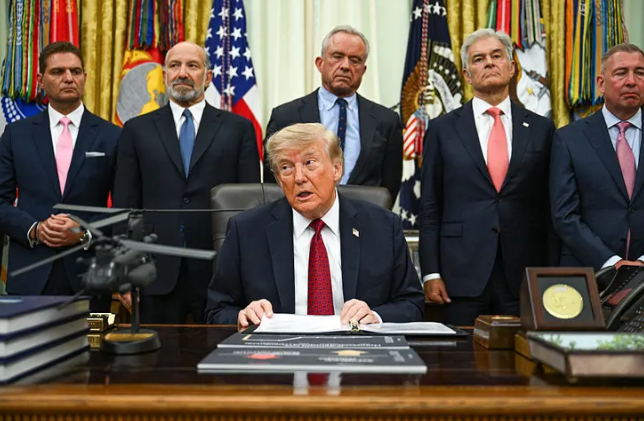
The Trump administration has announced agreements with nine more pharmaceutical companies to reduce the prices paid by Medicaid for prescription medicines, bringing the total number of drugmakers involved in the programme to 26.
The deals, announced on August 31, are based on a most-favoured-nation pricing model. Under the arrangement, Medicaid would pay prices comparable to those charged for the same medicines in other countries, particularly European nations.
The nine companies joining the programme are Alcon, Astellas Pharma, BeOne Medicines, BridgeBio, CSL, Kyowa Kirin, Sun Pharma, Teva Pharmaceuticals and UCB. They join 17 companies that agreed to similar arrangements at the end of 2025.
The administration says the agreements cover about 90% of medicines used by Americans. Participating companies have also agreed to shift some pharmaceutical manufacturing to the United States. In return, they will receive relief from pharmaceutical tariffs.
President Donald Trump has made lowering prescription drug prices a major policy priority. He has argued that Americans have historically paid considerably more for medicines than consumers in other developed countries.
The administration has also said some of the agreed prices will become available through TrumpRx.gov, allowing people to purchase medicines directly with cash rather than using insurance.
However, health policy experts say the immediate effect on most patients could be limited because the new arrangements primarily concern Medicaid. Many Medicaid beneficiaries already face relatively low out-of-pocket costs for prescription medicines.
Luca Maini, an assistant professor of health care policy at Harvard Medical School, said the main financial benefit could come through savings for state and federal Medicaid programmes rather than lower costs for individual patients.
The exact value of the savings remains difficult to determine because the details of the agreements and the prices Medicaid currently pays are not publicly available.
A July study published in JAMA estimated that agreements already reached with 17 pharmaceutical companies could save Medicaid programmes about $8.6 billion annually.
Thomas Hwang, an assistant professor at Brigham and Women’s Hospital and an author of the study, warned that such savings may not continue over the long term. Drugmakers could respond by increasing prices in other countries, which would raise the international prices used as a reference for the US.
Suhas Gondi, an instructor at Harvard Medical School, said companies could also delay launching medicines in countries with lower prices to avoid having those prices used in US calculations.
Critics also argue that the voluntary Medicaid agreements could reduce pressure on drugmakers to lower prices in Medicare, which covers a much larger population.
The latest announcement follows Trump’s May 2025 executive order directing officials to pursue international price comparisons for US prescription drugs. The administration has since reached agreements with several major drugmakers, including Pfizer.
Experts say the programme does not address some underlying reasons for high US drug prices, including extended patent protection that can delay the arrival of cheaper generic medicines.