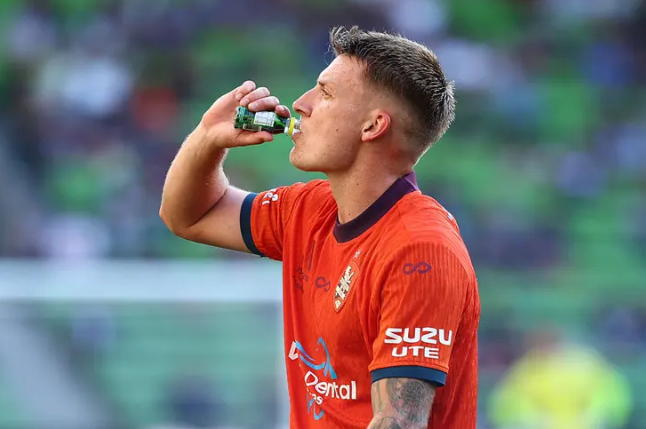
Pickle juice has once again found itself in the spotlight after it was used to treat a referee during a recent World Cup match, renewing interest in whether the salty drink can really ease muscle cramps.
The moment came during last week’s match between the United States and Australia when referee Felix Zwayer collapsed on the field with a muscle cramp. Medical staff handed him pickle juice, and after drinking it, he was able to return to the match within minutes.
The incident was far from unique. Pickle juice has long been used by athletes across a range of sports. Trainers in the Professional Women’s Hockey League have said they regularly provide it to players during games, while tennis players have also been seen drinking it during tournaments.
Sports medicine experts say the remedy has been around for decades. Dr. Jeanne Doperak, a sports medicine physician at the University of Pittsburgh Medical Center, recalled hearing about pickle juice during her own college athletics career in the 1990s. While it was often viewed as an old locker-room tradition, she said research has since found some evidence supporting its use.
Nutrition specialist Nicole Lund of New York University Langone Health said pickle juice can provide rapid relief for certain muscle cramps. She noted that drinking about two ounces may work faster than water in some situations.
Experts caution, however, that not all cramps have the same cause. Muscle cramps can result from dehydration, fatigue, low carbohydrate levels or other factors. If dehydration is responsible, water, electrolyte drinks or intravenous fluids remain the most appropriate treatment. Pickle juice appears to be more useful when cramps are linked to muscle fatigue rather than a lack of fluids.
Researchers believe the sharp, acidic taste of pickle juice triggers receptors in the mouth that send signals through the nervous system, helping relax muscles and stop cramping. According to Doperak, the effect comes from the taste itself rather than hydration, meaning some athletes may even benefit by swishing the liquid in their mouth without swallowing it.
Some athletes have also turned to yellow mustard, which experts say may produce a similar response because of its strong flavor.
While pickle juice may help relieve cramps after they begin, specialists stress that it is not designed to prevent them. Maintaining proper hydration before, during and after exercise remains the best defense against muscle cramps. For activities lasting longer than an hour, electrolyte drinks are generally recommended to replace minerals lost through sweating.
Experts also advise against drinking pickle juice regularly for general health. Because it contains high levels of sodium, frequent consumption may exceed recommended daily salt intake and increase health risks, particularly for people who are not engaged in strenuous physical activity.