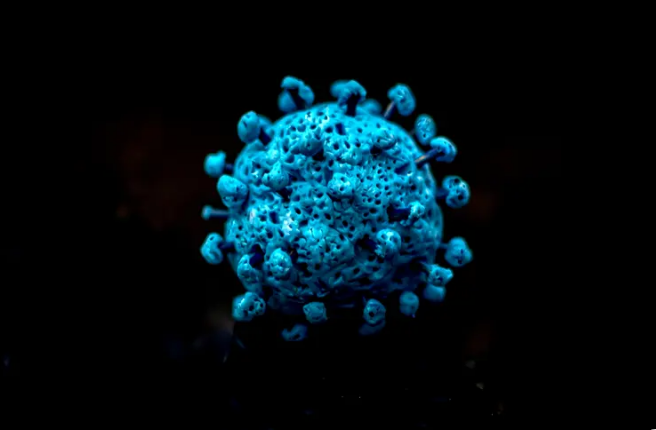
By now, it’s no surprise that the COVID virus continues to mutate, and new strains still pop up. The latest one is even making an unwelcome encore after first appearing on the scene in 2024. The BA.3.2 variant, nicknamed Cicada, was first detected in South Africa late that year, according to the U.S. Centers for Disease Control and Prevention (CDC). It initially receded as other variants took hold, but has reemerged in the United States about a year later, showing a pattern of dormancy and activity similar to its namesake. Cicada has already been linked to roughly 30% of recent COVID infections in Europe, though its spread in the U.S. remains limited.
Scientists say Cicada carries 70 to 75 new mutations in its spike protein, the part of the virus recognized by the human immune system. This represents more changes than seen in the dominant strains of 2023. Despite the number of mutations, the virus is still part of the Omicron family, first identified in 2021, and retains some genetic similarities to recent variants.
Cicada has been detected in more than two dozen U.S. states. However, tracking the variant is complicated as many people use at-home tests and reporting to public health authorities is no longer mandatory, reducing the precision of case data.
Vaccines targeting Omicron variants, including JN.1, still provide protection against Cicada, though effectiveness may be lower. “Lab data would indicate some protection, but not as much as against previous variants,” said Dr. William Schaffner, professor of infectious diseases at Vanderbilt University Medical Center. He noted that the majority of patients hospitalized with COVID remain high-risk individuals who are not up to date on vaccinations.
The CDC recommends that vulnerable groups receive COVID vaccines not only in the fall but also before the summer season, as COVID has tended to peak twice yearly. The primary goal of vaccination is to prevent severe disease and hospitalizations, rather than milder infections. “The function of the vaccine is to keep us out of the hospital,” Schaffner said.
Symptoms of the Cicada variant mirror those of earlier COVID strains and often resemble the flu, including sore throat, fever, chills, headache, cough, body aches, and runny nose. Most cases last a few days to a week. Tests are expected to remain effective against the variant because they detect parts of the virus that change less frequently.
It is not yet clear whether Cicada causes more severe disease or will become a dominant strain. Health experts are continuing to monitor infections and urge high-risk populations to stay current with vaccines to maintain protection against severe illness.