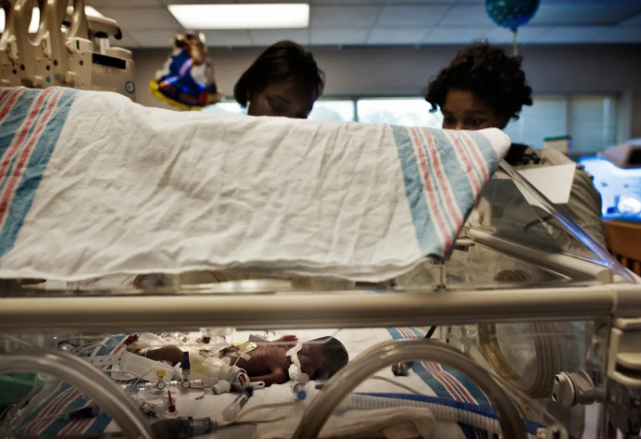
Health officials in Mississippi have declared a public health emergency in response to the state’s worsening infant mortality crisis, marking the highest rate in a decade. New state data show that in 2024, 9.7 infants died per 1,000 live births within their first year of life—an increase from 8.9 deaths per 1,000 in 2023.
“Every single infant loss represents a family devastated, a community impacted and a future cut short,” said State Health Officer Dr. Dan Edney. The emergency declaration, he explained, will allow Mississippi to mobilize resources more quickly in order to address the crisis. Since 2014, more than 3,500 babies have died before reaching their first birthday in the state.
The latest figures reveal troubling disparities. Neonatal deaths, occurring within the first month of life, rose sharply in 2024. The infant mortality rate among Black families reached 15.2 per 1,000 live births—nearly three times higher than the 5.8 per 1,000 recorded for white families.
Mississippi has long struggled with poor maternal and infant health outcomes. A 2024 March of Dimes report card gave the state an “F,” ranking it worst in the nation for both infant mortality and preterm births. Preterm birth, when a baby arrives before 38 weeks of pregnancy, significantly increases the risk of long-term health complications.
“This is reflective of a larger trend,” said Dr. Michael Warren, chief medical and health officer for the March of Dimes, noting that between 2023 and 2024, infant mortality worsened in 24 states, including neighboring Arkansas and Louisiana.
A range of systemic issues contribute to the crisis. Many rural counties in Mississippi have lost hospitals with maternity services or obstetricians in recent years. More than half of the state’s counties are classified as maternity-care deserts, meaning they lack obstetric hospitals, OB-GYNs, or certified nurse midwives. Low Medicaid and private insurance reimbursement rates have driven many providers out of practice, leaving remaining facilities short-staffed and vulnerable to burnout. For mothers experiencing emergencies during childbirth, the lack of timely access to doctors can be life-threatening.
Mississippi’s decision not to expand Medicaid has further compounded the problem. Women without health insurance often go into pregnancy with unmanaged chronic conditions such as diabetes and obesity, which are strongly linked to prematurity. “Taking care of those chronic diseases before pregnancy matters,” Warren said, “so that when a person chooses to become pregnant, they’re in an optimal state of health.”
In response to the crisis, Mississippi officials say they will expand prenatal care opportunities in underserved counties and broaden the reach of a community health worker program designed to connect families with medical services close to home.
“Mississippi has the knowledge, the resources and the resilience to change this story,” Edney said. “It will take all of us—policymakers, healthcare providers, communities and families—working together to give every child the chance to live, thrive and celebrate their first birthday.”