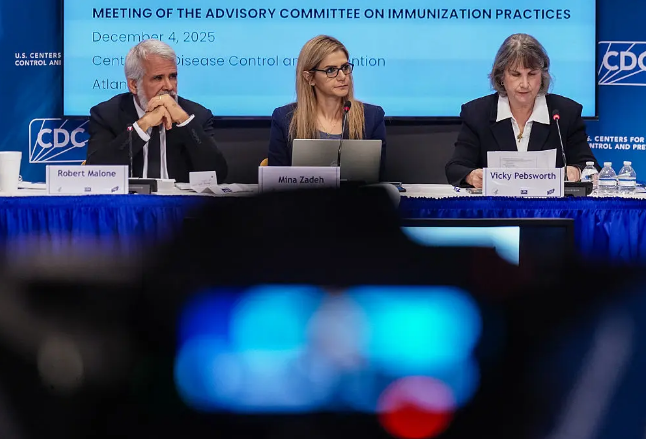
A U.S. advisory panel has voted to remove the decades-long recommendation for a universal hepatitis B vaccine for newborns, prompting widespread concern among medical experts and public-health organizations.
On December 5, the Centers for Disease Control and Prevention’s (CDC) Advisory Committee for Immunization Practices (ACIP) voted 8 to 3 to eliminate the routine birth dose of the vaccine, which has been recommended since 1991. Under the new guidance, newborns will only receive the vaccine if their mothers test positive for hepatitis B or their infection status is unknown. In other cases, families and doctors will determine when to give the first dose. The committee also endorsed “shared decision-making” for whether children complete the full three-dose series.
The decision immediately drew criticism from infectious-disease specialists and health organizations. Dr. Tom Frieden, former CDC director, called the vote “misguided and dangerous,” warning it could put millions of American children at higher risk of liver disease, cancer, and premature death. A joint statement from groups including the American Medical Association and March of Dimes described the move as a “significant departure” from science-driven vaccine policy and said it “puts Americans’ health at risk.”
The original birth-dose recommendation aimed to protect infants from chronic hepatitis B infection, which can occur in up to 90% of newborns infected during their first year. Chronic infection increases the risk of liver failure, cirrhosis, and cancer, with up to 25% of infected individuals dying from related complications. Since the universal vaccination program began, infection rates in the U.S. have dropped by 99%.
Critics say the ACIP vote reflects a shift in the committee’s composition under Health and Human Services Secretary Robert F. Kennedy Jr., who replaced long-standing members with individuals expressing skepticism about vaccines. During the December 4–5 meeting, members questioned the safety of vaccinating newborns, including potential effects on brain development, despite decades of evidence showing no significant harm. Three committee members opposed the change, citing the vaccine’s proven efficacy and warning that delaying or skipping doses could lead to a resurgence of hepatitis B infections.
Experts also raised concerns about practical implications. Dr. Jim Campbell of the American Academy of Pediatrics said the new guidance could confuse families and create logistical hurdles, as children might require additional blood tests and separate clinic visits to determine immunity before completing the series.
Globally, the World Health Organization and over 100 countries continue to recommend a birth dose. Epidemiologists stress that deviating from this schedule in the U.S., where prenatal care and hepatitis B testing are not universally accessible, could increase infection rates.
The CDC acting director, Jim O’Neill, now has the authority to adopt or reject ACIP’s recommendations. Medical experts, including Senator Bill Cassidy, have urged him to maintain the existing guidance, emphasizing the vaccine’s safety and the critical role of the birth dose in preventing liver disease.