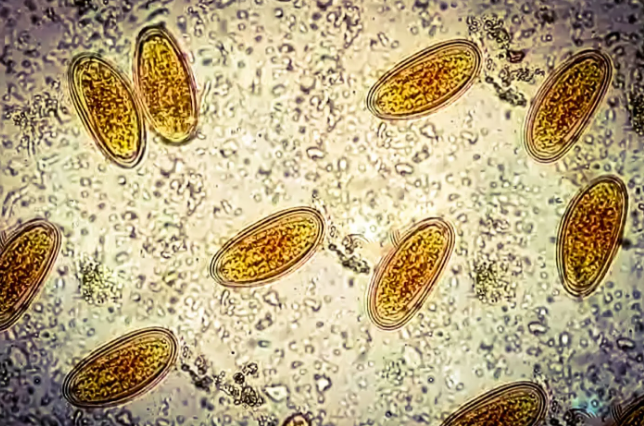
Human feces discovered in a cave in northern Mexico have given scientists a remarkably detailed glimpse into the health and hygiene of people who lived there more than a millennium ago. Researchers say the preserved excrement—known in archaeology as paleofeces—contains evidence that its long-ago depositors were infected with a variety of parasites.
The findings, published this week in PLOS ONE, are based on DNA analysis of ten samples collected from Cueva de los Muertos Chiquitos, a site near Durango, Mexico. The feces, dating from around 725 to 920 A.D., were originally excavated in the 1950s and have been stored in research collections ever since. Thanks to the cave’s dry climate, the remains were exceptionally well-preserved, offering rare insight into the gut microbiomes of ancient people.
A research team led by Drew Capone, an environmental microbiologist at Indiana University, used modern DNA screening techniques typically applied to contemporary fecal samples to detect signs of parasitic infection. “Our work usually looks at how sanitation affects health—where fecal matter goes in the environment and what its impacts are,” Capone said. “We wanted to see if these same tools could help us study health in the distant past.”
The team ground the ancient feces into powder to extract genetic material, identifying traces of pinworms, Giardia—a protozoan parasite—and several bacterial pathogens. Many samples contained multiple parasites, which Capone said suggests that poor sanitation was likely a significant issue for the people living in the region more than 1,000 years ago.
However, some experts have questioned the reliability of the methods used. Kirsten Bos and Alexander Hübener, ancient DNA specialists at the Max Planck Institute for Evolutionary Anthropology, cautioned that the techniques employed in the new study may not effectively distinguish ancient DNA from modern contamination. Because DNA deteriorates over time, more advanced sequencing technologies are typically required to confirm that genetic fragments are truly ancient.
“The problem is that older methods favor longer DNA strands, which are less likely to survive over centuries,” Bos explained. “You can’t easily tell whether what you’re seeing is genuinely ancient or something introduced later.”
Even so, Hübener, who co-authored a 2021 study on the same cave samples, said the detection of larger parasites such as worms is “believable,” given similar findings in earlier research.
Experts say combining both traditional and next-generation techniques on the same specimens could help clarify which results are reliable. “It would be fascinating to see how the two approaches compare,” Bos said. “That could tell us just how much we can trust older testing methods in studies like this.”