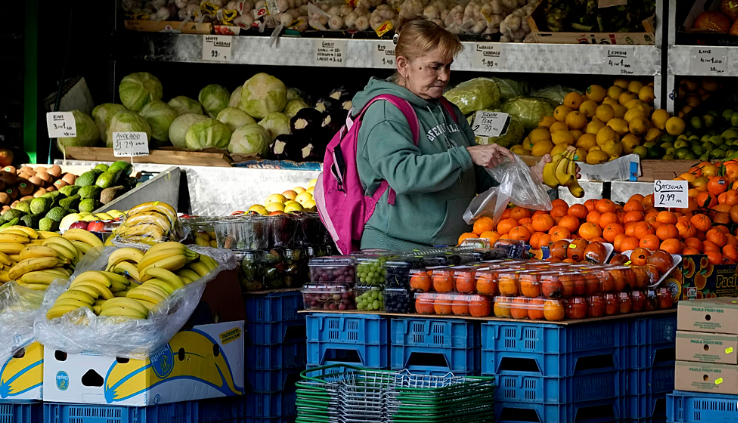
The ongoing conflict between the US, Israel, and Iran is pushing oil prices higher, creating a ripple effect on food costs across Europe. Experts warn that disruptions to energy and fertilizer supplies, along with rising shipping expenses, could significantly raise the cost of living.
Brent crude has frequently surged above $100 per barrel amid joint US–Israeli strikes on Iran and Tehran’s retaliatory attacks. The crisis has already impacted global energy markets, and analysts say food prices in Europe are expected to rise as a result.
“Global, as well as European, food prices are expected to rise because of the conflict due to the disruption of fertiliser and energy supply, as well as rising shipping costs,” said Zsolt Darvas, senior fellow at Bruegel. He highlighted that a large portion of the world’s oil and fertilizer shipments pass through the Strait of Hormuz, which remains effectively closed due to the conflict.
Higher fertilizer costs translate directly into higher agricultural production costs. Rising oil and liquefied natural gas prices also increase fuel expenses across the food supply chain, including farming operations, irrigation, transport, storage, and food processing.
The United Nations Food and Agriculture Organization has projected that global fertilizer prices could average 15–20 percent higher in the first half of 2026 if the conflict continues. FAO chief economist Maximo Torero said higher input costs could reduce crop yields, tightening global grain supplies and pushing prices further.
Three main channels are expected to drive food inflation in Europe. First, higher energy costs for transportation and logistics. Second, rising natural gas and fertilizer prices that raise production costs for farmers. Third, increased demand for biofuels, which diverts crops like maize and soybean oil from food production. This combination could tighten global grain supplies, echoing the surge in food prices Europe experienced after Russia’s invasion of Ukraine in 2022.
Some countries in Europe are more vulnerable than others. The FAO notes that Gulf refineries supplied about 60 percent of Europe’s jet fuel and 20 percent of diesel in 2025. Countries with major aviation hubs or heavy diesel usage in agriculture and transport, such as the Netherlands, Belgium, Germany, France, Italy, and Spain, are at higher risk. Dependence on Gulf-supplied liquefied natural gas adds further exposure.
Maria Castroviejo, senior analyst at Rabobank, said that European farmers are already stocked for the current season, meaning the effects on food prices will likely be felt in the autumn. She noted that energy and fertilizer costs eventually flow through the supply chain, resulting in higher prices at supermarkets.
Oxford Economics expects the crisis to affect Europe more than the United States due to the region’s greater exposure to energy shocks. Food inflation in the EU averaged 3.3 percent in 2025 but varied widely by country, from 0.3 percent in Cyprus to 7 percent in Estonia. Turkey remains an outlier, with food inflation exceeding 30 percent annually.
Analysts warn that unless the conflict stabilizes soon, Europeans should brace for rising food prices as the war’s economic impact continues to ripple through the global supply chain.