



















Connect with us

Hi, what are you looking for?

Politics

Trump Administration Moves to End Popular Student Loan Repayment Plan, Millions Could Face Higher Payments

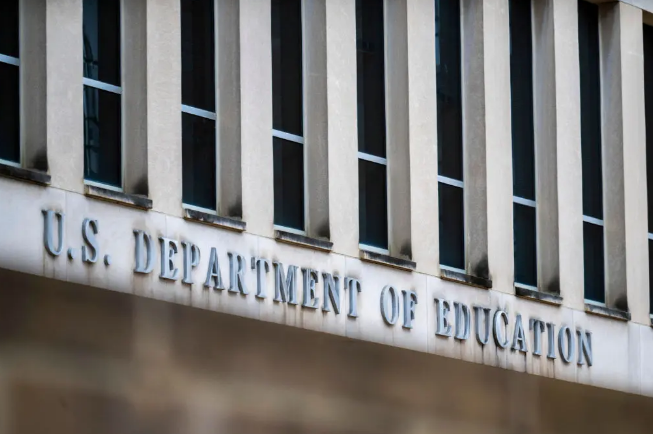
Millions of Americans who have seen their monthly student loan payments reduced to as low as $0 under the Biden Administration’s Saving on Valuable Education (SAVE) plan could soon be required to switch repayment programs and resume paying off their loans. The Department of Education announced this week that it had reached an agreement with the state of Missouri to end the income-driven program, which currently serves around seven million borrowers. The move still requires court approval.

Under the agreement, no new borrowers will be enrolled in SAVE, and existing participants will have a limited period to select an alternative repayment plan. The Trump Administration has argued that the program is illegal and overly generous, claiming it would have cost taxpayers more than $342 billion over ten years.

“The law is clear: if you take out a loan, you must pay it back,” said Under Secretary of Education Nicholas Kent. “Thanks to the State of Missouri and other states fighting against this egregious federal overreach, American taxpayers can now rest assured they will no longer be forced to serve as collateral for illegal and irresponsible student loan policies.”

The Biden Administration launched SAVE in August 2023 to provide relief for borrowers by reducing monthly payments based on income and family size. The program allowed millions to cut their payments, with about 4.6 million borrowers lowering payments to $0. It also offered early forgiveness for low-balance loans. Despite its popularity, SAVE faced legal challenges from Republican-led states, culminating in a federal court ruling in February 2024 that temporarily blocked the program.

While the Biden-era Education Department had placed SAVE participants in interest-free forbearance amid litigation, interest accrual resumed in August 2024 to comply with court orders. Borrowers were encouraged to transition to other repayment plans to continue progress toward loan forgiveness programs.

If the court approves the agreement, borrowers will need to choose from other income-driven repayment (IDR) options or revert to the Standard Repayment Plan. Alternatives include the Income-Based Repayment (IBR) Plan, which calculates monthly payments based on discretionary income, typically around 10% of that amount. The Standard Repayment Plan spreads payments over 10 to 30 years, depending on whether loans are consolidated, with generally higher monthly payments but lower total interest.

The recently passed “Big Beautiful Bill” gives affected borrowers until July 1, 2028, to select a new plan. The legislation also introduces a revised standard repayment plan and a new Repayment Assistance Plan while phasing out some older IDR options, such as the Pay As You Earn (PAYE) and Income-Contingent Repayment (ICR) plans.

Advocacy groups have warned that ending SAVE will remove the most affordable repayment option for millions of borrowers, potentially making it harder for them to stay current on loans while managing living expenses. The Education Department has pledged to provide guidance and tools, including a loan simulator, to help borrowers navigate the transition to alternative repayment plans.


Business

Fraudsters are increasingly using AI-generated images and videos to trick people into handing over sensitive personal and financial information, according to FraudSMART, the financial crime awareness initiative operated by the Banking and Payments Federation Ireland (BPFI). The organisation has reported a rise in online adverts promoting fake, State-backed investment schemes. These scams often use fabricated images of well-known politicians and business figures to make the offers appear legitimate and encourage users to click on registration links. Niamh Davenport, head of financial crime at BPFI, said scammers are deliberately exploiting recent media coverage of a planned State-backed savings and investment scheme to give their frauds a sense of credibility. “They often claim the scheme is open to everyone, but that places are limited and being ‘snapped up’ fast, in order to pressure people to act quickly,” she said. “They typically promise guaranteed returns or a guaranteed monthly income.” FraudSMART said that while anyone can be targeted, people in their early 50s are particularly vulnerable to investment scams. This age group is often focused on retirement planning, making them more receptive to financial offers that appear secure or high-yield. According to the organisation, most scams follow a similar pattern. Victims are first directed to click a registration link and complete a short online form providing their contact details. They are then contacted by someone posing as a financial adviser, who urges them to make an immediate “security deposit” to secure participation in the scheme. Once a payment is made, the money is quickly moved through multiple accounts, often overseas, making recovery extremely difficult. Davenport warned that scammers are becoming more sophisticated in their use of technology, particularly AI tools that allow them to create realistic but entirely fake promotional content. These materials are designed to mimic legitimate financial advertisements and build trust with potential victims. Recent figures from An Garda Síochána show investment fraud rose by 20% last year, with losses exceeding €20 million. The scale of individual scams varies widely, ranging from smaller crypto-related frauds involving a few hundred euro to large-scale investment schemes where victims lose tens of thousands. FraudSMART is urging the public to remain cautious when encountering online investment advertisements, especially those promising guaranteed returns or requiring urgent action. It also advises consumers to avoid sharing personal information with unverified sources and to be wary of pressure tactics designed to rush financial decisions. Authorities continue to warn that fraudsters are adapting quickly, using advanced digital tools to target victims across multiple platforms.

Trending

Business

Fraudsters are increasingly using AI-generated images and videos to trick people into handing over sensitive personal and financial information, according to FraudSMART, the financial crime awareness initiative operated by the Banking and Payments Federation Ireland (BPFI). The organisation has reported a rise in online adverts promoting fake, State-backed investment schemes. These scams often use fabricated images of well-known politicians and business figures to make the offers appear legitimate and encourage users to click on registration links. Niamh Davenport, head of financial crime at BPFI, said scammers are deliberately exploiting recent media coverage of a planned State-backed savings and investment scheme to give their frauds a sense of credibility. “They often claim the scheme is open to everyone, but that places are limited and being ‘snapped up’ fast, in order to pressure people to act quickly,” she said. “They typically promise guaranteed returns or a guaranteed monthly income.” FraudSMART said that while anyone can be targeted, people in their early 50s are particularly vulnerable to investment scams. This age group is often focused on retirement planning, making them more receptive to financial offers that appear secure or high-yield. According to the organisation, most scams follow a similar pattern. Victims are first directed to click a registration link and complete a short online form providing their contact details. They are then contacted by someone posing as a financial adviser, who urges them to make an immediate “security deposit” to secure participation in the scheme. Once a payment is made, the money is quickly moved through multiple accounts, often overseas, making recovery extremely difficult. Davenport warned that scammers are becoming more sophisticated in their use of technology, particularly AI tools that allow them to create realistic but entirely fake promotional content. These materials are designed to mimic legitimate financial advertisements and build trust with potential victims. Recent figures from An Garda Síochána show investment fraud rose by 20% last year, with losses exceeding €20 million. The scale of individual scams varies widely, ranging from smaller crypto-related frauds involving a few hundred euro to large-scale investment schemes where victims lose tens of thousands. FraudSMART is urging the public to remain cautious when encountering online investment advertisements, especially those promising guaranteed returns or requiring urgent action. It also advises consumers to avoid sharing personal information with unverified sources and to be wary of pressure tactics designed to rush financial decisions. Authorities continue to warn that fraudsters are adapting quickly, using advanced digital tools to target victims across multiple platforms.

You May Also Like

Politics

WASHINGTON — The Pentagon announced on Sunday that the United States will send a Terminal High Altitude Area Defense (THAAD) battery to Israel, alongside...

Health

NEW YORK — Teen smoking in the United States has reached an all-time low in 2024, with significant declines in overall youth tobacco use,...

Politics

WASHINGTON — As the countdown to the November 5 presidential election continues, former President Donald Trump is urging his supporters to aim for a...

Politics

In September, NASA announced that summer 2024 was the hottest on record. Just days later, the U.S. faced the dual impact of Hurricanes Helene...